Cyborg Snails
March 14th, 2012Via: Nature:
The dozen or so brown garden snails crawling around the plastic, moss-filled terrarium in Evgeny Katz’s laboratory look normal, but they have a hidden superpower: they produce electricity.
Into each mollusc, Katz and his team at Clarkson University in Potsdam, New York, have implanted tiny biofuel cells that extract electrical power from the glucose and oxygen in the snail’s blood. Munching mainly on carrots, the cyborg snails live for around half a year and generate electricity whenever their implanted electrodes are hooked up to an external circuit. “The animals are quite fit — they eat, drink and crawl. We take care to keep them alive and happy,” Katz says.
Self-powered cyborgs
Snails are just one of several living creatures to have been ‘electrified’ like this. Katz’s research, reported last week in the Journal of the American Chemical Society1, comes hot on the heels of a January paper in the same journal from researchers led by Daniel Scherson at Case Western Reserve University in Cleveland, Ohio, who have implanted biofuel cells into live cockroaches. And in work yet to be published, Sameer Singhal, who directs a team working on biomedical and energy technology at CFD Research Corporation in Huntsville, Alabama, together with researchers at the University of California, Berkeley, reports implanting biofuel cells into beetles. The insects survived the process and generated power for more than two weeks, the scientists say.
All of these efforts are aimed at helping to create insect (or snail) cyborgs, a concept that has attracted funding from the US Department of Defense. For at least a decade, researchers have been creating battery-powered microcircuits with sensors and radio antennae and implanting them into various bugs and creepy-crawlies so that the creatures could gather information about their surroundings for environmental monitoring or military purposes.
But batteries might be too bulky and short-lived to power prolonged missions — which is where the idea of tapping into the creatures’ own metabolism comes in. Katz has shown that in snails, biofuel cells could provide a steady dribble of power for months. “The truly impressive portion of [Katz’s] work is that the implantation provides such stable potential for such a long period of time,” says Shelley Minteer, who works on biofuel cells at the University of Utah in Salt Lake City.
Related: DARPA Researchers Rig Cyborg Beetles to Capture Energy That Powers Neuro Control Electronics
Spain Has ‘Worse Problems Than Greece’
March 14th, 2012Via: CNBC:
Spain’s eye-wateringly high unemployment and the collapse of its real estate market mean that Spain has significantly worse problems than Greece and could threaten the euro zone’s new-found, albeit fragile stability, an analyst told CNBC.com Tuesday.
“Spain has very large downside risks and it needs to tread very carefully – Spain is in a very fragile situation. Its problems are significantly worse than Greece’s,” Sony Kapoor, managing director at international think tank Re-Define said.
He added that a “huge danger” was posed to the macroeoconomic situation and the social fabric of the country by the current austerity program and an expected 5 percent deficit adjustment.
“The financial panic is temporarily over but 2012 will be the year of austerity across Europe and Spain is a microcosm for the euro zone as a whole,” he said.
Earlier this month the Spanish premier Mariano Rajoy, publicly defied Brussels-imposed targets, which were 4.4 percent of gross domestic product, saying that the targets were based on forecasts of economic growth when in fact the government expects the Spanish economy to contract this year.
The country has the euro zones highest rate of unemployment – now over 22 percent.
Surreal Situation in U.S. Post Office
March 14th, 2012My dad went to his local post office to mail me some CDs that I had forgotten to pack when I left the U.S. back in 2006. He said that a bunch of other “old farts” in the post office were also sending packages to their children and grandchildren who were living overseas.
He overhead an elderly woman complaining about how she couldn’t send something or other to Australia for $2. Then the guy next to her said he couldn’t believe how much it cost to send stuff to his daughter in Costa Rica.
“My son is in Australia, too,” said the guy in front of my dad.
“Mine is in New Zealand,” said my dad.
Someone else had a daughter in France and another had a son in Germany.
A group formed outside and they started taking out pictures of their grandchildren from purses and wallets to share around.
“Kevin, I’ve been going to that post office for damn near fifty years and I’ve never seen anything like that before. In my day, if a guy talked about wanting to leave America to find a better deal, he would have gotten his ass kicked.”
“Yeah, dad, love it or leave it, eh?” which actually means, “Oh for f*ck’s sake, here we go again.”
“I don’t know what happened to this country.”
I could have said, “Turning off Fox news and that stream of bullshit that comes out your AM radio all day and night would be a good idea,” but having had conversations like that hundreds of times before, I changed the subject and talked about what his grandsons have been up to, how many lamb chops Becky has to cook to keep up with their appetites and how we borrowed some clucky bantam hens to hatch some chicks for us, etc.
My dad is the type of person who always thinks tomorrow is going to be better than today, regardless of the fact that the preponderance of data suggests otherwise. But that gathering at the post office rattled him a bit. I could sort of hear the gears in his head turning as he tried to work through it: If America is the best country in the world, why was I just talking with a group of strangers about how all of our kids split?
“Maybe they’ll get a war going after the next election,” he offered hopefully.
“You mean, another war. There are four or five concurrent wars underway right now.”
Silence.
“Ok, later, dad.”
NEW YORK STATE SET TO ADD ALL CONVICT DNA TO ITS DATABASE
March 14th, 2012Via: New York Times:
New York is poised to establish one of the most expansive DNA databases in the nation, requiring people convicted of everything from fare beating to first-degree murder to provide samples of their DNA to the state.
On Tuesday, Gov. Andrew M. Cuomo and state lawmakers were putting the finishing touches on a deal to establish a so-called all-crimes DNA database, a move that is supported by all of the state’s 62 district attorneys and 58 sheriffs, as well as 400 police chiefs.
After 244 Years, Encyclopaedia Britannica Stops the Presses
March 14th, 2012The Internet, and all of the data on it, could disappear in the blink of an eye.
Have a nice day.
Via: New York Times:
After 244 years, the Encyclopaedia Britannica is going out of print.
Those coolly authoritative, gold-lettered reference books that were once sold door-to-door by a fleet of traveling salesmen and displayed as proud fixtures in American homes will be discontinued, company executives said.
In an acknowledgment of the realities of the digital age — and of competition from the Web site Wikipedia — Encyclopaedia Britannica will focus primarily on its online encyclopedias and educational curriculum for schools. The last print version is the 32-volume 2010 edition, which weighs 129 pounds and includes new entries on global warming and the Human Genome Project.
“It’s a rite of passage in this new era,” Jorge Cauz, the president of Encyclopaedia Britannica Inc., a company based in Chicago, said in an interview. “Some people will feel sad about it and nostalgic about it. But we have a better tool now. The Web site is continuously updated, it’s much more expansive and it has multimedia.”
In the 1950s, having the Encyclopaedia Britannica on the bookshelf was akin to a station wagon in the garage or a black-and-white Zenith in the den, a possession coveted for its usefulness and as a goalpost for an aspirational middle class. Buying a set was often a financial stretch, and many families had to pay for it in monthly installments.
But in recent years, print reference books have been almost completely overtaken by the Internet and its vast spread of resources, including specialized Web sites and the hugely popular — and free — online encyclopedia Wikipedia.
Classified Documents Contradict FBI on Post-9/11 Probe of Saudis, Ex-Senator Says
March 13th, 2012Via: MSNBC:
Former Florida Sen. Bob Graham, who co-chaired Congress’ Joint Inquiry into the 9/11 terrorist attacks, has seen two classified FBI documents that he says are at odds with the bureau’s public statements that there was no connection between the hijackers and Saudis then living in Sarasota, Fla.
“There are significant inconsistencies between the public statements of the FBI in September and what I read in the classified documents,” Graham said.
“One document adds to the evidence that the investigation was not the robust inquiry claimed by the FBI,” Graham said. “An important investigative lead was not pursued and unsubstantiated statements were accepted as truth.”
Whether the 9/11 hijackers acted alone, or whether they had support within the U.S., remains an unanswered question — one that began to be asked as soon as it became known that 15 of the 19 hijackers were Saudi citizens. It was underlined when Congress’s bipartisan inquiry released its public report in July 2003. The final 28 pages, regarding possible foreign support for the terrorists, were censored in their entirety — on President George W. Bush’s instructions.
…
The FBI-led investigation a decade ago focused on Abdulaziz al-Hijji and his wife, Anoud, who moved out of their home in the upscale, gated community of Prestancia, near Sarasota, and left the country in the weeks before 9/11. The couple left behind three cars and numerous personal belongings, such as furnishings, clothes, medicine and food, according to law enforcement records. After the 9/11 attacks, a concerned neighbor contacted the FBI.
Analysis of Prestancia gatehouse visitor logs and photographs of license tags showed that vehicles driven by several of the future hijackers had visited the al-Hijji home at 4224 Escondito Circle, according to a counterterrorism officer and former Prestancia administrator Larry Berberich.
Al-Hijji, who now lives and works in London, recently called 9/11 “a crime against the USA and all humankind” and said he was “saddened and oppressed by these false allegations.” He also said it was “not true” that Mohamed Atta and other 9/11 hijackers visited him at his Sarasota home.
The FBI has backed up al-Hijji. After initially declining to comment, the bureau confirmed that it did investigate but said it found nothing sinister. Agents, however, have refused to answer reporters’ specific questions about its investigation or its findings about the Prestancia gate records.
The FBI reiterated its position in a Feb. 7 letter that denied a Freedom of Information Act request seeking records from its Sarasota probe. The denial said their release “could constitute an unwarranted invasion of personal privacy.”
…
Graham sees the information now emerging about Sarasota as ominously similar to discoveries his inquiry made in California. Leads there indicated that the first two hijackers to reach the U.S., Saudis Khalid al-Mihdhar and Nawaf al-Hazmi, received help first from a diplomat at the Saudi consulate in Los Angeles and then from two other Saudis, one of whom helped al-Mihdhar and al-Hazmi find a place to live. Multiple sources told investigators they believed both the latter Saudis had been Saudi government agents.
…
Graham is troubled by what he sees as FBI headquarters’ apparent effort to conceal information, including the fact that al-Mihdhar and al-Hazmi lived for months in California in the home of a paid FBI informant. Even when that emerged, the FBI denied his inquiry access to the informant. Graham wonders if that was merely because of the bureau’s embarrassment, or because the informant knew something that “would be even more damaging were it revealed.”
The newly surfaced FDLE documents containing informant Hammoud’s troubling 2004 information about al-Hijji have reinforced Graham’s concerns because they conflict with the FBI’s public statements.
Hammoud’s statement that al-Hijji introduced him to Saudi terror suspect Shukrijumah is consistent with the report that Prestancia gate logs showed Shukrijumah had visited the al-Hijji house – and buttresses longstanding official suspicion that he was linked to the hijackers. When Mohamed Atta visited a federal immigration office in Miami to discuss a visa problem in May 2001, a 9/11 Commission footnote reports, a man who closely resembled Shukrijumah accompanied him.
Related: Flashback 2002: 9/11 Hijackers Passports Were Issued by the CIA – U.S. Consulate Whistleblower
Canada Too Dangerous for Cheney to Visit
March 13th, 2012Via: Ottawa Citizen:
Former U.S. vice-president Dick Cheney has cancelled an April appearance in Toronto citing concerns that Canada is too dangerous.
“He felt that in Canada the risk of violent protest was simply too high,” said Ryan Ruppert, president of promotions company Spectre Live Corp., which had booked Cheney for an April 24 appearance at the Metro Toronto convention centre.
Research Credit: Timbooch
Go to Trial: Crash the Justice System
March 13th, 2012Good luck with that.
Via: New York Times:
AFTER years as a civil rights lawyer, I rarely find myself speechless. But some questions a woman I know posed during a phone conversation one recent evening gave me pause: “What would happen if we organized thousands, even hundreds of thousands, of people charged with crimes to refuse to play the game, to refuse to plea out? What if they all insisted on their Sixth Amendment right to trial? Couldn’t we bring the whole system to a halt just like that?”
…
I launched, predictably, into a lecture about what prosecutors would do to people if they actually tried to stand up for their rights. The Bill of Rights guarantees the accused basic safeguards, including the right to be informed of charges against them, to an impartial, fair and speedy jury trial, to cross-examine witnesses and to the assistance of counsel.
But in this era of mass incarceration — when our nation’s prison population has quintupled in a few decades partly as a result of the war on drugs and the “get tough” movement — these rights are, for the overwhelming majority of people hauled into courtrooms across America, theoretical. More than 90 percent of criminal cases are never tried before a jury. Most people charged with crimes forfeit their constitutional rights and plead guilty.
“The truth is that government officials have deliberately engineered the system to assure that the jury trial system established by the Constitution is seldom used,” said Timothy Lynch, director of the criminal justice project at the libertarian Cato Institute. In other words: the system is rigged.
And Now… Homeless People Used as Wi-Fi Hotspots
March 12th, 2012Via: BuzzFeed:
At SXSW, the annual tech startup conference in Austin, 13 homeless men are hanging around the conference center wearing white shirts that say “I’m _____, a 4G hotspot.” Each is carrying a wireless internet device, and for a PayPal donation, will provide conference-goers with internet access for as long as they want. .
The men are part of a campaign called “Homeless Hotspots,” devised by a marketing firm called BBH. It effectively debuted today, and started backfiring immediately.
The first person to flag the stunt as a little off was the New York Times’s David Gallagher, who called the plan it “a little dystopian.”
DARPA Director Quits Pentagon for Job at Google
March 12th, 2012Iron Triangle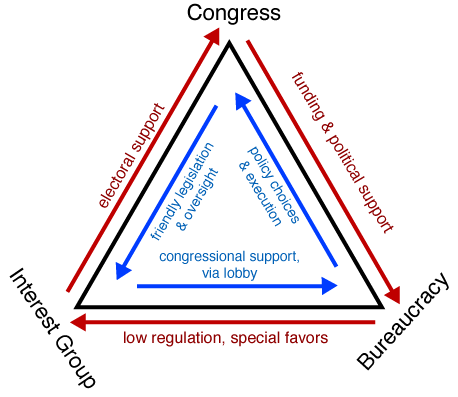
So, no, she’s not in jail yet.
Via: Wired:
Darpa director Regina Dugan will soon be stepping down from her position atop the Pentagon’s premiere research shop to take a job with Google. Dugan, whose controversial tenure at the agency lasted just under three years, was “offered and accepted at senior executive position” with the internet giant, according to Darpa spokesman Eric Mazzacone. She felt she couldn’t say no to such an “innovative company,” he adds.
Related: Google Cozies Up to the Pentagon