Are Americans a Broken People?
December 16th, 2009In general, Americans represent a collective battered spouse who hopes that the batterer will change. Spitting teeth and squinting through two black eyes, they usually go back for more of the same.
This isn’t politics. It’s pathology.
Via: Alternet:
Can people become so broken that truths of how they are being screwed do not “set them free” but instead further demoralize them? Has such a demoralization happened in the United States?
Do some totalitarians actually want us to hear how we have been screwed because they know that humiliating passivity in the face of obvious oppression will demoralize us even further?
What forces have created a demoralized, passive, dis-couraged U.S. population?
Can anything be done to turn this around?
Can people become so broken that truths of how they are being screwed do not “set them free” but instead further demoralize them?
Yes. It is called the “abuse syndrome.” How do abusive pimps, spouses, bosses, corporations, and governments stay in control? They shove lies, emotional and physical abuses, and injustices in their victims’ faces, and when victims are afraid to exit from these relationships, they get weaker. So the abuser then makes their victims eat even more lies, abuses, and injustices, resulting in victims even weaker as they remain in these relationships.
Does knowing the truth of their abuse set people free when they are deep in these abuse syndromes?
No. For victims of the abuse syndrome, the truth of their passive submission to humiliating oppression is more than embarrassing; it can feel shameful — and there is nothing more painful than shame. When one already feels beaten down and demoralized, the likely response to the pain of shame is not constructive action, but more attempts to shut down or divert oneself from this pain. It is not likely that the truth of one’s humiliating oppression is going to energize one to constructive actions.
Has such a demoralization happened in the U.S.?
In the United States, 47 million people are without health insurance, and many millions more are underinsured or a job layoff away from losing their coverage. But despite the current sellout by their elected officials to the insurance industry, there is no outpouring of millions of U.S. citizens on the streets of Washington, D.C., protesting this betrayal.
Polls show that the majority of Americans oppose U.S. wars in Afghanistan and Iraq as well as the taxpayer bailout of the financial industry, yet only a handful of U.S. citizens have protested these circumstances.
Remember the 2000 U.S. presidential election? That’s the one in which Al Gore received 500,000 more votes than George W. Bush. That’s also the one that the Florida Supreme Court’s order for a recount of the disputed Florida vote was overruled by the U.S. Supreme Court in a politicized 5-4 decision, of which dissenting Justice John Paul Stevens remarked: “Although we may never know with complete certainty the identity of the winner of this year’s presidential election, the identity of the loser is perfectly clear. It is the nation’s confidence in the judge as an impartial guardian of the rule of law.” Yet, even this provoked few demonstrators.
When people become broken, they cannot act on truths of injustice. Furthermore, when people have become broken, more truths about how they have been victimized can lead to shame about how they have allowed it. And shame, like fear, is one more way we become even more psychologically broken.
U.S. citizens do not actively protest obvious injustices for the same reasons that people cannot leave their abusive spouses: They feel helpless to effect change. The more we don’t act, the weaker we get. And ultimately to deal with the painful humiliation over inaction in the face of an oppressor, we move to shut-down mode and use escape strategies such as depression, substance abuse, and other diversions, which further keep us from acting. This is the vicious cycle of all abuse syndromes.
Do some totalitarians actually want us to hear how we have been screwed because they know that humiliating passivity in the face of obvious oppression will demoralize us even further?
Maybe.
Shortly before the 2000 U.S. presidential election, millions of Americans saw a clip of George W. Bush joking to a wealthy group of people, “What a crowd tonight: the haves and the haves-more. Some people call you the elite; I call you my base.” Yet, even with these kind of inflammatory remarks, the tens of millions of U.S. citizens who had come to despise Bush and his arrogance remained passive in the face of the 2000 non-democratic presidential elections.
Perhaps the “political genius” of the Bush-Cheney regime was in their full realization that Americans were so broken that the regime could get away with damn near anything. And the more people did nothing about the boot slamming on their faces, the weaker people became.
What forces have created a demoralized, passive, dis-couraged U.S. population?
The U.S. government-corporate partnership has used its share of guns and terror to break Native Americans, labor union organizers, and other dissidents and activists. But today, most U.S. citizens are broken by financial fears. There is potential legal debt if we speak out against a powerful authority, and all kinds of other debt if we do not comply on the job. Young people are broken by college-loan debts and fear of having no health insurance.
The U.S. population is increasingly broken by the social isolation created by corporate-governmental policies. A 2006 American Sociological Review study (“Social Isolation in America: Changes in Core Discussion Networks over Two Decades”) reported that, in 2004, 25 percent of Americans did not have a single confidant. (In 1985, 10 percent of Americans reported not having a single confidant.) Sociologist Robert Putnam, in his 2000 book, Bowling Alone, describes how social connectedness is disappearing in virtually every aspect of U.S. life. For example, there has been a significant decrease in face-to-face contact with neighbors and friends due to suburbanization, commuting, electronic entertainment, time and money pressures and other variables created by governmental-corporate policies. And union activities and other formal or informal ways that people give each other the support necessary to resist oppression have also decreased.
We are also broken by a corporate-government partnership that has rendered most of us out of control when it comes to the basic necessities of life, including our food supply. And we, like many other people in the world, are broken by socializing institutions that alienate us from our basic humanity. A few examples:
Schools and Universities: Do most schools teach young people to be action-oriented — or to be passive? Do most schools teach young people that they can affect their surroundings — or not to bother? Do schools provide examples of democratic institutions — or examples of authoritarian ones?
A long list of school critics from Henry David Thoreau to John Dewey, John Holt, Paul Goodman, Jonathan Kozol, Alfie Kohn, Ivan Illich, and John Taylor Gatto have pointed out that a school is nothing less than a miniature society: what young people experience in schools is the chief means of creating our future society. Schools are routinely places where kids — through fear — learn to comply to authorities for whom they often have no respect, and to regurgitate material they often find meaningless. These are great ways of breaking someone.
Today, U.S. colleges and universities have increasingly become places where young people are merely acquiring degree credentials — badges of compliance for corporate employers — in exchange for learning to accept bureaucratic domination and enslaving debt.
Mental Health Institutions: Aldous Huxley predicted today’s pharmaceutical societyl “[I]t seems to me perfectly in the cards,” he said, “that there will be within the next generation or so a pharmacological method of making people love their servitude.”
Today, increasing numbers of people in the U.S. who do not comply with authority are being diagnosed with mental illnesses and medicated with psychiatric drugs that make them less pained about their boredom, resentments, and other negative emotions, thus rendering them more compliant and manageable.
Oppositional defiant disorder (ODD) is an increasingly popular diagnosis for children and teenagers. The official symptoms of ODD include, “often actively defies or refuses to comply with adult requests or rules,” and “often argues with adults.” An even more common reaction to oppressive authorities than the overt defiance of ODD is some type of passive defiance — for example, attention deficit hyperactivity disorder (ADHD). Studies show that virtually all children diagnosed with ADHD will pay attention to activities that they actually enjoy or that they have chosen. In other words, when ADHD-labeled kids are having a good time and in control, the “disease” goes away.
When human beings feel too terrified and broken to actively protest, they may stage a “passive-aggressive revolution” by simply getting depressed, staying drunk, and not doing anything — this is one reason why the Soviet empire crumbled. However, the diseasing/medicalizing of rebellion and drug “treatments” have weakened the power of even this passive-aggressive revolution.
Television: In his book Four Arguments for the Elimination of Television (1978), Jerry Mander (after reviewing totalitarian critics such as George Orwell, Aldous Huxley, Jacques Ellul, and Ivan Illich) compiled a list of the “Eight Ideal Conditions for the Flowering of Autocracy.”
Mander claimed that television helps create all eight conditions for breaking a population. Television, he explained, (1) occupies people so that they don’t know themselves — and what a human being is; (2) separates people from one another; (3) creates sensory deprivation; (4) occupies the mind and fills the brain with prearranged experience and thought; (5) encourages drug use to dampen dissatisfaction (while TV itself produces a drug-like effect, this was compounded in 1997 the U.S. Food and Drug Administration relaxing the rules of prescription-drug advertising); (6) centralizes knowledge and information; (7) eliminates or “museumize” other cultures to eliminate comparisons; and (8) redefines happiness and the meaning of life.
Commericalism of Damn Near Everything: While spirituality, music, and cinema can be revolutionary forces, the gross commercialization of all of these has deadened their capacity to energize rebellion. So now, damn near everything – not just organized religion — has become “opiates of the masses.”
The primary societal role of U.S. citizens is no longer that of “citizen” but that of “consumer.” While citizens know that buying and selling within community strengthens that community and that this strengthens democracy, consumers care only about the best deal. While citizens understand that dependency on an impersonal creditor is a kind of slavery, consumers get excited with credit cards that offer a temporarily low APR.
Consumerism breaks people by devaluing human connectedness, socializing self-absorption, obliterating self-reliance, alienating people from normal human emotional reactions, and by selling the idea that purchased products — not themselves and their community — are their salvation.
Can anything be done to turn this around?
When people get caught up in humiliating abuse syndromes, more truths about their oppressive humiliations don’t set them free. What sets them free is morale.
What gives people morale? Encouragement. Small victories. Models of courageous behaviors. And anything that helps them break out of the vicious cycle of pain, shut down, immobilization, shame over immobilization, more pain, and more shut down.
The last people I would turn to for help in remobilizing a demoralized population are mental health professionals — at least those who have not rebelled against their professional socialization. Much of the craft of relighting the pilot light requires talents that mental health professionals simply are not selected for nor are they trained in. Specifically, the talents required are a fearlessness around image, spontaneity, and definitely anti-authoritarianism. But these are not the traits that medical schools or graduate schools select for or encourage.
Mental health professionals’ focus on symptoms and feelings often create patients who take themselves and their moods far too seriously. In contrast, people talented in the craft of maintaining morale resist this kind of self-absorption. For example, in the question-and-answer session that followed a Noam Chomsky talk (reported in Understanding Power: The Indispensable Chomsky, 2002), a somewhat demoralized man in the audience asked Chomsky if he too ever went through a phase of hopelessness. Chomsky responded, “Yeah, every evening . . .”
If you want to feel hopeless, there are a lot of things you could feel hopeless about. If you want to sort of work out objectively what’s the chance that the human species will survive for another century, probably not very high. But I mean, what’s the point? . . . First of all, those predictions don’t mean anything — they’re more just a reflection of your mood or your personality than anything else. And if you act on that assumption, then you’re guaranteeing that’ll happen. If you act on the assumption that things can change, well, maybe they will. Okay, the only rational choice, given those alternatives, is to forget pessimism.”
A major component of the craft of maintaining morale is not taking the advertised reality too seriously. In the early 1960s, when the overwhelming majority in the U.S. supported military intervention in Vietnam, Chomsky was one of a minority of U.S. citizens actively opposing it. Looking back at this era, Chomsky reflected, “When I got involved in the anti-Vietnam War movement, it seemed to me impossible that we would ever have any effect. . . So looking back, I think my evaluation of the ‘hope’ was much too pessimistic: it was based on a complete misunderstanding. I was sort of believing what I read.”
An elitist assumption is that people don’t change because they are either ignorant of their problems or ignorant of solutions. Elitist “helpers” think they have done something useful by informing overweight people that they are obese and that they must reduce their caloric intake and increase exercise. An elitist who has never been broken by his or her circumstances does not know that people who have become demoralized do not need analyses and pontifications. Rather the immobilized need a shot of morale.
U.S. Taxpayers Pay for Citigroup’s Fat Bastards to Get Fatter
December 16th, 2009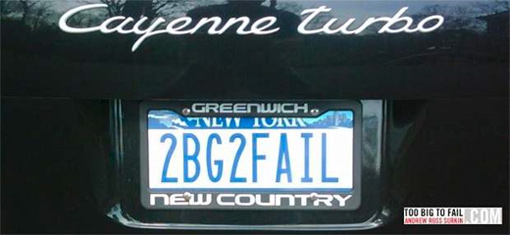
Change
Via: Washington Post:
The federal government quietly agreed to forgo billions of dollars in potential tax payments from Citigroup as part of the deal announced this week to wean the company from the massive taxpayer bailout that helped it survive the financial crisis.
The Internal Revenue Service on Friday issued an exception to long-standing tax rules for the benefit of Citigroup and a few other companies partially owned by the government. As a result, Citigroup will be allowed to retain billions of dollars worth of tax breaks that otherwise would decline in value when the government sells its stake to private investors.
While the Obama administration has said taxpayers are likely to profit from the sale of the Citigroup shares, accounting experts said the lost tax revenue could easily outstrip those profits.
Army Again Turns to Depleted Uranium for New Weaponry
December 16th, 2009Via: Wired:
For decades, Depleted Uranium (DU) has been the material of choice for anti-tank projectiles – despite a series of controversies about its potential health hazards. But for the near future, at least, the American military will keep on using DU. Alternatives based on tungsten haven’t panned out. Now, the U.S. Army is upgrading to a new 120mm Advanced Kinetic Energy round, and about the only thing we know for sure is that it will be made of DU. The generation after that… may be an improved version of DU called Stakalloy.
Kinetic rounds are metal slim darts fired from tanks like the MAA1 Abrams at very high velocity. The preference for DU is not based, as some conspiracy theorists would have it, on a diabolical scheme to dump nuclear waste in developing countries. It’s because in addition to its high hardness and density, it has a property called adiabatic shear banding. Essentially, DU is crumbly rather than squishy. During the process of high-speed penetration through metal armor, fragments flake off a DU projectile. This means that a DU projectile is “self sharpening” (compared to tungsten, which tends to deform in a “blunted,” mushroom shape.) It also means that DU produces a pyrophoric effect, filling the vehicle hit with a lethal fireball of tiny burning particles. That too makes it more effective than tungsten.
Move to National ID Cards Delayed
December 16th, 2009Helpful map shows states that passed anti RealID legislation (Orange):
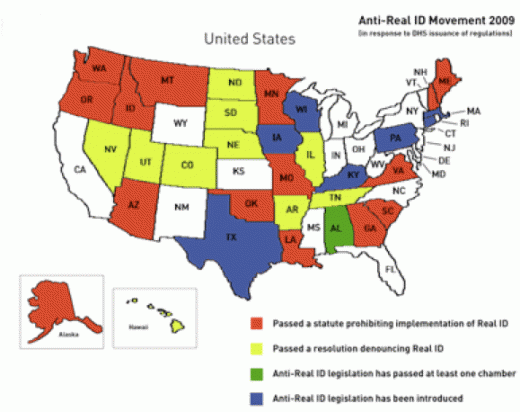
Legislative Efforts Against RealID (ACLU)
Via: Wired:
The United States’ quest for a national identification database associated with driver’s licenses won’t be finished by year’s end.
The deadline was Dec. 31 for the states to create what would be the largest identification database of its kind under the auspices of the Real ID program. The law also mandates uniform anti-counterfeiting standards for state driver’s licenses.
None of the states are in full compliance with the law, first adopted in 2005, requiring state motor vehicle bureaus to obtain and internally scan and store personal information like Social Security cards and birth certificates for a national database, according to the American Civil Liberties Union. About half the states oppose the mandate, or have said they would never comply.
Beginning Jan.1, the law was supposed to have blocked anybody from boarding a plane using their driver’s license as ID if their resident state did not comport with the Real ID program. But the Department of Homeland Security is set to extend, for at least a year, the deadline of the Real ID program that has raised the ire of privacy advocates.
Pilots at British Airways Move Millions Out of Company Pension
December 16th, 2009Via: Telegraph:
Pilots at British Airways are moving millions of pounds out of the company’s lucrative pension scheme amid fears it will go bust.
Workers fear the troubled company will fail to deliver on its pension promises after the airline announced this week that its pension deficit had reached almost £4 billion.
Experts said it showed a “lack of faith” among the company’s own staff in its pension scheme.
GULF OIL STATES LAUNCHING SINGLE CURRENCY
December 16th, 2009I’ll believe it when I see it.
Anyway, maybe it will be backed by this thing:
Via: Telegraph:
The Arab states of the Gulf region have agreed to launch a single currency modelled on the euro, hoping to blaze a trail towards a pan-Arab monetary union swelling to the ancient borders of the Ummayad Caliphate.
“The Gulf monetary union pact has come into effect,” said Kuwait’s finance minister, Mustafa al-Shamali, speaking at a Gulf Co-operation Council (GCC) summit in Kuwait.
The move will give the hyper-rich club of oil exporters a petro-currency of their own, greatly increasing their influence in the global exchange and capital markets and potentially displacing the US dollar as the pricing currency for oil contracts. Between them they amount to regional superpower with a GDP of $1.2 trillion (£739bn), some 40pc of the world’s proven oil reserves, and financial clout equal to that of China.
Saudi Arabia, Kuwait, Bahrain, and Qatar are to launch the first phase next year, creating a Gulf Monetary Council that will evolve quickly into a full-fledged central bank.
The Emirates are staying out for now – irked that the bank will be located in Riyadh at the insistence of Saudi King Abdullah rather than in Abu Dhabi. They are expected join later, along with Oman.
Moody’s Warns of ‘Social Unrest’ as Sovereign Debt Spirals
December 16th, 2009Via: Telegraph:
Britain and other countries with fast-rising government debts must steel themselves for a year in which “social and political cohesiveness” is tested, Moody’s warned.
In a sombre report on the outlook for next year, the credit rating agency raised the prospect that future tax rises and spending cuts could trigger social unrest in a range of countries from the developing to the developed world.
It said that in the coming years, evidence of social unrest and public tension may become just as important signs of whether a country will be able to adapt as traditional economic metrics. Signalling that a fiscal crisis remains a possibility for a leading economy, it said that 2010 would be a “tumultuous year for sovereign debt issuers”.
It added that the sheer quantity of debt to be raised by Britain and other leading nations would increase the risk of investor fright.
Strikingly, however, it added that even if countries reached agreement on the depth of the cuts necessary to their budgets, they could face difficulties in carrying out the cuts. The report, which comes amid growing worries about Britain’s credit rating, said: “In those countries whose debt has increased significantly, and especially those whose debt has become unaffordable, the need to rein in deficits will test social cohesiveness. The test will be starker as growth disappoints and interest rates rise.”
It said the main obstacle for fiscal consolidation plans would be signs not necessarily of economic strength but of “political and social tension”.
Greece, where the government has committed to drastic cuts in public expenditure, has suffered a series of riots over the past year which are thought to have been fuelled by economic pressures.
Bernanke Named Time Magazine’s Person of the Year
December 16th, 2009Via: Bloomberg:
Federal Reserve Chairman Ben Bernanke was named “Person of the Year” by Time magazine today for leading the “most-powerful, least-understood government force shaping our lives,” Managing Editor Richard Stengel said.
Bernanke, 56, was picked for his efforts to shepherd the U.S. out of the biggest economic slump since the Great Depression, Stengel said while announcing the choice on NBC’s “Today” show this morning.
“He was the great scholar of the Depression, and he saw what looked like another depression coming and he decided he would do whatever it takes to forestall that,” Stengel said. “And I think he did. It could have been a lot worse; there were things he could have done better. One of his responsibilities is to put full employment in society and he hasn’t really stepped up on that. But in terms of influence and how the economy went this year, Bernanke was the guy.”
There were six finalists for “Person of the Year,” including U.S. President Barack Obama; House Speaker Nancy Pelosi; Steve Jobs, Apple Inc.’s co-founder and chief executive officer; the Chinese worker, an “increasingly influential group”; General Stanley McChrystal, the top U.S. and NATO commander in Afghanistan; and Jamaican sprinter and Olympic gold-medalist Usain Bolt.
Cryptogon Readers Sign Up For Hosting with BlueHost
December 16th, 2009Thanks to the owners of puppetgov.com and crackfora.com for signing up for hosting with BlueHost.
There was a third signup by a New Zealand business that deals with the retail food sector. If you’re reading, I couldn’t imagine that you would want me to mention your site on Cryptogon. Know that I appreciate that you helped out and please email me if you would like me to acknowledge your site. (Just mention the domain name you used on BlueHost.)
Cryptogon received $270.
Cryptogon Readers Send Contributions
December 16th, 2009Thank you to Cryptogon readers who sent contributions in the first half of December.
Pookie $75
TR $25
DT $25
DP $5
DR NZ$50