Army Wages iPod Warfare in Baghdad
December 17th, 2008Via: Wired:
During a humanitarian aid distribution in Baghdad’s Sadr City, Staff Sgt. Kent Crandall brought along a nifty iPod accessory: an Army psychological operations loudspeaker. Crandall had loaded the iPod with Iraqi pop music, which he cranked during the halal food handout in this war-torn neighborhood.
This is only one of the tools in the psychological operations arsenal here. Maj. Byron Sarchet, a PsyOps operations officer with 3rd Brigade Combat Team, 4th Infantry Division, told me about a second set-up that uses his favorite method: microbroadcasting.
Radio geeks would be familiar with the tools: a 100 Watt Harris AM/FM “radio in a box” transmitter coupled with a Marantz rack-mountable portable CD/cassette player. The PsyOps team loaded up a laptop with contemporary Iraqi and Arabic pop music and started broadcasting on a local frequency, 93.9 FM.
The transmitter is designed for use by emergency responders. It has a small range — Sarchet estimated it had a reach of only a few kilometers — but in a densely populated area like Sadr City, it can reach a large audience.
According to Sarchet, the whole thing was a “quick fix.” He wanted to broadcast a pro-coalition message during heavy fighting in the city. So he liberated the radio transmitter from a State Department embedded Provincial Reconstruction Team (e-PRT), put the radio on the roof of a building, and started broadcasting.
“I stole that radio from e-PRT,” he said. “It was in their office and they weren’t using it, and I said, ‘I gotta have it – I’m taking it.’ We’re going to broadcast into Sadr City on it.”
The programming is mostly pop music, interlaced with coalition messages and numbers for an anonymous tips line. Sarchet said the music was a counter to religious extremism of the Jaish al-Mahdi (JAM) militia, which had cracked down on the sale of pop music as part of a puritanical campaign.
Radio 93.9 is still broadcasting in Sadr City, but the propaganda propaganda is not over. You can still see Sadrist flyers up in the city, and some graffiti is starting to reappear on the walls. “JAM slogans are popping up again,” Sarchet said.
OPEC LOOKING TO CUT OIL PRODUCTION BY 2.5 MILLION BARRELS PER DAY
December 17th, 2008Via: Reuters:
OPEC ministers continued their meeting on Wednesday, with the possibility of an even bigger supply cut of 2.5 million barrels per day being agreed, OPEC delegates said.
“We want a big cut,” said one of the delegates. “And 2.5 is on the table and a possibility.”
OPEC ministers have been focusing on a reduction of about 2 million bpd.
Federal Reserve Sets Stage for Weimar-style Hyperinflation
December 17th, 2008Via: Engdahl:
The Federal Reserve has bluntly refused a request by a major US financial news service to disclose the recipients of more than $2 trillion of emergency loans from US taxpayers and to reveal the assets the central bank is accepting as collateral. Their lawyers resorted to the bizarre argument that they did so to protect ‘trade secrets.’ Is the secret that the US financial system is de facto bankrupt? The latest Fed move is further indication of the degree of panic and lack of clear strategy within the highest ranks of the US financial institutions. Unprecedented Federal Reserve expansion of the Monetary Base in recent weeks sets the stage for a future Weimar-style hyperinflation perhaps before 2010.
On November 7 Bloomberg filed suit under the US Freedom of Information Act (FOIA) requesting details about the terms of eleven new Federal Reserve lending programs created during the deepening financial crisis.
The Fed responded on December 8 claiming it’s allowed to withhold internal memos as well as information about ‘trade secrets’ and ‘commercial information.’ The central bank did confirm that a records search found 231 pages of documents pertaining to the requests.
The Bernanke Fed in recent weeks has stepped in to take a role that was the original purpose of the Treasury’s $700 billion Troubled Asset Relief Program (TARP). The difference between a Fed bailout of troubled financial institutions and a Treasury bailout is that central bank loans do not have the oversight safeguards that Congress imposed upon the TARP. Perhaps those are the ‘trade secrets the hapless Fed Chairman,Ben Bernanke, is so jealously guarding from the public.
Coming hyperinflation?
The total of such emergency Fed lending exceeded $2 trillion on Nov. 6. It had risen by an astonishing 138 percent, or $1.23 trillion, in the 12 weeks since Sept. 14, when central bank governors relaxed collateral standards to accept securities that weren’t rated AAA. They did so knowing that on the following day a dramatic shock to the financial system would occur because they, in concert with the Bush Administration, had decided to let it occur.
On September 15 Bernanke, New York Federal Reserve President, Tim Geithner, the new Obama Treasury Secretary-designate, along with the Bush Administration, agreed to let the fourth largest investment bank, Lehman Brothers, go bankrupt, defaulting on untold billions worth of derivatives and other obligations held by investors around the world. That event, as is now widely accepted , triggered a global systemic financial panic as it was no longer clear to anyone what standards the US Government was using to decide which institutions were ‘too big to fail’ and which not. Since then the US Treasury Secretary has reversed his policies on bank bailouts repeatedly leading many to believe Henry Paulson and the Washington Administration along with the Fed have lost control.
In response to the deepening crisis, the Bernanke Fed has decided to expand what is technically called the Monetary Base, defined as total bank reserves plus cash in circulation, the basis for potential further high-powered bank lending into the economy. Since the Lehman Bros. default, this money expansion rose dramatically by end October at a year-year rate of growth of 38%, has been without precedent in the 95 year history of the Federal Reserve since its creation in 1913. The previous high growth rate, according to US Federal Reserve data, was 28% in September 1939, as the US was building up industry for the evolving war in Europe.
By the first week of December, that expansion of the monetary base had jumped to a staggering 76% rate in just 3 months. It has gone from $836 billion in December 2007 when the crisis appeared contained, to $1,479 billion in December 2008, an explosion of 76% year-on-year. Moreover, until September 2008, the month of the Lehman Brothers collapse, the Federal Reserve had held the expansion of the Monetary Base virtually flat. The 76% expansion has almost entirely taken place within the past three months, which implies an annualized expansion rate of more than 300%.
Despite this, banks do not lend further, meaning the US economy is in a depression free-fall of a scale not seen since the 1930’s. Banks do not lend in large part because under Basle BIS lending rules, they must set aside 8% of their capital against the value of any new commercial loans. Yet the banks have no idea how much of the mortgage and other troubled securities they own are likely to default in the coming months, forcing them to raise huge new sums of capital to remain solvent. It’s far ‘safer’ as they reason to pass on their toxic waste assets to the Fed in return for earning interest on the acquired Treasury paper they now hold. Bank lending is risky in a depression.
Hence the banks exchange $2 trillion of presumed toxic waste securities consisting of Asset-Backed Securities in sub-prime mortgages, stocks and other high-risk credits in exchange for Federal Reserve cash and US Treasury bonds or other Government securities rated (still) AAA, i.e. risk-free. The result is that the Federal Reserve is holding some $2 trillion in largely junk paper from the financial system. Borrowers include Lehman Brothers, Citigroup and JPMorgan Chase, the US’s largest bank by assets. Banks oppose any release of information because that might signal ‘weakness’ and spur short-selling or a run by depositors.
Making the situation even more drastic is the banking model used first by US banks beginning in the late 1970’s for raising deposits, namely the acquiring of ‘wholesale deposits’ by borrowing from other banks on the overnight interbank market. The collapse in confidence since the Lehman Bros. default is so extreme that no bank anywhere, dares trust any other bank enough to borrow. That leaves only traditional retail deposits from private and corporate savings or checking accounts.
To replace wholesale deposits with retail deposits is a process that in the best of times will take years, not weeks. Understandably, the Federal Reserve does not want to discuss this. That is clearly also behind their blunt refusal to reveal the nature of their $2 trillion assets acquired from member banks and other financial institutions. Simply put, were the Fed to reveal to the public precisely what ‘collateral’ they held from the banks, the public would know the potential losses that the government may take.
Congress is demanding more transparency from the Federal Reserve and US Treasury on its bailout lending. On December 10 in Congressional hearings by the House Financial Services Committee , Representative David Scott, a Georgia Democrat, said Americans had ‘been bamboozled,’ slang for defrauded.
Pictures: Greek Riots
December 17th, 2008Research Credit: DP
The Cognitive Mechanism Behind Political Fundamentalism… And Probably Lots of Other Fundamentalisms
December 17th, 2008In trying to understand public support for the Bush regime, I came to the conclusion that mass delusion was the culprit. The same goes for the Obama Hope and Change Industrial Complex.
Average people are lost, so we don’t expect much in the way of informed opinion from them. But what about people who should know better? Maybe this is just part of the generalized crackup. As people’s lives spiral out of control, they start to believe in all sorts of nonsense, or, more accurately, more and different nonsense.
In the twenty or so years that I’ve been paying attention to politics, though, I’ve never seen more smart people devise such convoluted and irrational theories to justify support for a political candidate than I have with Barack Obama. The fever dream reality of the Obama hive mind goes something like this:
Obama is just pretending to be evil so that he can get into power, but then the Hope and Change, etc. will flow.
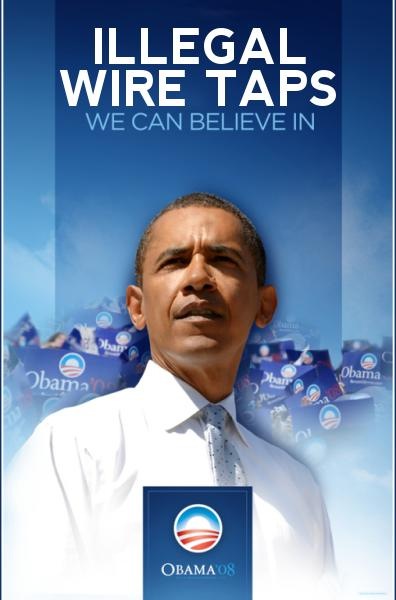
If this seems like a vaguely Left political version of snake handling Pentecostals, the two have a lot in common. As it turns out, my guess about mass delusion wasn’t too far off.
The next time you encounter a wide-eyed Obama zombie, know that you’re dealing with an irrational, emotional fundamentalism that insulates the mind of the afflicted. Like water off a duck’s back, easily observable, readily verifiable data slide right off. And (this is my favorite part), the fundamentalists get a sense of immense satisfaction from devising twisted and ridiculous justifications for their positions.
Via: A Meaningful Life:
In a recent experiment, psychologist Drew Weston worked with two groups of people who strongly supported different candidates in an election. Each individual was shown two videos, one in which their candidate clearly contradicted himself, and the other in which the candidate they opposed contradicted himself. When asked what they had seen, the supporters of each candidate saw the contradictions of the candidate they opposed, but not those of their own candidate. Weston reports that “test subjects on both sides reached totally biased conclusions by ignoring information that could not rationally be discounted.”
During the experiments, the subjects’ brains were being scanned, and Weston says, “We did not see any increased activation of the parts of the brain normally engaged during reasoning.” On the contrary, the parts of the brain that lit up were those associated with emotions. So the subjects seem to have used their emotions to guide them in forming their conclusions. And the most fascinating part is that, rather than being troubled by the contradictions of their candidate, the subjects seemed to get significant pleasure out of twisting the information to fit what they wanted to believe. As Weston concludes, “Essentially, it appears as if partisans twirl the cognitive kaleidoscope until they get the conclusions they want, and then they get massively reinforced for it, with the elimination of negative emotional states and activation of positive ones.”
Research Credit: Kiwicando
Citibank’s Computers Down, Blocking Account Info
December 17th, 2008Via: AP:
Customers of New York City-based Citibank have lost access to much of their account information because of a computer outage.
Many of the troubled bank’s clients haven’t been able to retrieve account details online or by telephone since Tuesday afternoon. Others can access only parts of their account profiles.
Citibank telephone representatives say they don’t know what caused the outage but technicians are working to fix it. They’ve been telling customers to call back after Wednesday morning.
A Citibank spokeswoman hasn’t replied to a phone message or an e-mail sent after business hours.
Citibank is a division of Citigroup Inc., which is struggling to survive the global financial crisis with billions of dollars in aid from the government.
Scotland Yard Anti-terrorism Adviser Wanted by Interpol for Terrorist Offences
December 17th, 2008Via: Telegraph:
Former intelligence chief Baroness Neville-Jones has urged Scotland Yard to sack one of its anti-terrorism advisers who is wanted by Interpol for terrorist offences.
Mohamed Ali Harrath has reportedly been advising the Metropolitan Police, the UK’s biggest force, on countering Muslim extremism.
Lady Neville-Jones, who chaired the Joint Intelligence Committee, and is a former governor of the BBC, has called for the Home Office and Scotland Yard to explain themselves.
She told The Times: “Unless and until the Interpol red notice is removed it seems quite wrong that Mohamed Ali Harrath should be employed as an adviser.
“The Government must answer some very serious questions about its border control and vetting systems. Both the Home Office and Metropolitan Police have access to Interpol’s information. Did the Home Office access this information before allowing Mohamed Ali Harrath to enter, and did the Metropolitan Police check it before allowing him to work for them? If not, why not?”
Lady Neville-Jones, the Shadow Security minister, added: “If they did access Interpol’s data, how could the Home Office let in and the Met employ an individual with a red notice for alleged links to a suspected terrorist organisation? The FCO must be aware that the Tunisian Government, an ally in the fight against terrorism, has asked for the extradition of this man.”
Tunisian-born Mr Harrath, 45, is listed as wanted on the Interpol website as the subject of a red notice issued in 1992.
Interpol is the world’s largest international police organisation.
The site lists his categories of alleged offences as counterfeiting, forgery, crimes involving the use of weapons, explosives and terrorism.
He has allegedly been convicted in absentia of numerous criminal and terrorism-related offences by Tunisian courts and sentenced to 56 years in prison.
Mr Harrath allegedly co-founded the Tunisian Islamic Front (FIT), an organisation which the Tunisian government claims has the aim of establishing “an Islamic state by means of armed revolutionary violence”.
Mr Harrath has denied that the FIT has any terrorist link, saying in the past that it was simply a “nonviolent political party founded in 1986 to oppose the one-party state in Tunisia”.
However, he is also reported to have said: “There is nothing wrong or criminal in trying to establish an Islamic state”.
The Met refused to comment on the story.
It has also emerged the Met had been providing funding, estimated to be tens of thousands of pounds, for an annual Muslim gathering, Global Peace and Unity, hosted by Mr Harrath’s Islam Channel, which is based in London.
The event was addressed this year by leading politicians including Shahid Malik, the Justice Minister, Nick Clegg, the Liberal Democrat leader, and Dominic Grieve, the Shadow Home Secretary.
It has also been reported that Mr Harrath’s Islam Channel was earlier this year rebuked by Ofcom, the media regulator, for showing a biased film about Jerusalem that only gave the Muslim viewpoint.
Ofcom found last year it had broken its broadcasting code by twice showing the documentary, Jerusalem: A Promise of Heaven, which argued Muslims had been deprived ownership of the holy city.
Although it was decided it was not a sufficiently serious breach to warrant a statutory sanction, Ofcom did fine the channel £30,000 for a separate incident over breaking election rules by letting candidates from the Respect party present programmes.
Research Credit: cptmarginal
New York: Massive Tax Increases
December 17th, 2008How about actually cutting the budget!? Unthinkable.
Via: New York Daily News:
Gov. Paterson released a $121 billion slash-and-burn budget Tuesday morning that slams New Yorkers with 88 new fees and taxes – even on their iPods.
Calling the budget the “greatest economic and fiscal challenge of our lifetimes,” Paterson acknowledged his spending plan cuts deep.
But he said the pain must be shared to deal with the fallout from the Wall Street collapse.
The budget will cost the city an estimated $650 million in aid.
But it’s the $4 billion in new fees and taxes that are sure to aggravate everyday New Yorkers, who would be paying more for a host of services:
* An “iPod tax” that charges state and local sales tax for “digitally delivered entertainment services” – in other words, that new Beyonce song you download.
* State sales tax at movie theaters, sporting events, taxis, buses, limousines and cable and satellite TV and radio.
* Costlier driving with the repeal of the 8-cents-per-gallon sales tax cap on motor and diesel motor fuel, plus and increase in the auto rental tax.
* Tuition increases at SUNY and CUNY, $620 and $600 a year respectively.
* A 50 cent tax on cigars. The current tax is equal to 37% of the wholesale price, or 34 cents a cigar.
* No more sales tax break on clothes and shoes worth $110 or less, except during two weeks a year.
* Higher taxes on wine, beer and flavored malt beverages. He would also impose an 18% tax on non-nutritional drinks like soda.
* The rich would pay more for luxury items through an additional 5% tax imposed on cars costing more than $60,000, aircraft costing more than $500,000, yachts costing at least $200,000 and jewelry and furs costing in excess of $20,000.
* In addition, a host of a fees, including those related to motor vehicle licensing and registration, parks and auto insurance, would go up, as would various state-imposed fines.
Even with the cuts, the 2009-10 budget would increase a little more than 1%, the smallest hike since 1996-97.
Paterson said the state is facing a $51 billion shortfall over the next four years at a time when tax revenues are expected to drop 6.6% next year.
“This executive budget begins the difficult process of fundamentally reevaluating both how we manage our government and what the state can afford to spend in a time of plummeting revenues,” Paterson wrote in a budget letter.
Paterson is asking lawmakers to pass a $1.7 billion plan by Feb. 1 to reduce the current year’s budget deficit.
He then laid out a separate $121 billion spending plan for the 2009-10 fiscal year that begins April 1. He is asking the Legislature to adopt the new budget a month early.
Fed Rate Cut to Record Low
December 17th, 2008WARNING: This is not a recommendation to buy, sell or hold any financial instrument.
On gold, I expected more of an initial move above $850 than what actually materialized (spot hit $860.70). However, if the move is going to be sustained, it will go in waves. There’s a surge and then consolidation, surge, consolidation, etc.
On the daily interval, the gold chart still looks very sick. It is moving in a down trending channel. On the longer interval intraday charts, however, the rally over the last several says looks quite healthy. Know that we’re approaching the upper channel line on the daily at around $885, with both the stochastic and RSI in extreme overbought territory. For shorter term traders with profit, I would be very cautious about trying to fight overhead resistance AND extreme oscillators. Consider entering stops or paring your position down. There’s no way to know if it will break up and out of this channel. If it does, that’s very bullish.
(I would be embarrassed to admit how much time I’ve spent looking for quantitative ways of forecasting reversals out of channels. So, when I say that there’s no way to know, what I mean is that I have no way of knowing. Maybe someone knows how to do it.)
The dollar has been hammered, as widely anticipated here and elsewhere. If we see follow through on the dollar breakdown, and there’s a very good chance that we will, there’s a corresponding good chance that gold will break up and out of the channel.
Maybe the Fed will start buying those U.S. Treasuries and really get this party started.
As usual, I must add that I don’t trade paper gold; futures, ETFs etc. I buy the physical metal and then forget about it.
Here are a couple charts that show the the recent rally on an intraday basis and the resistance ahead on the daily interval:
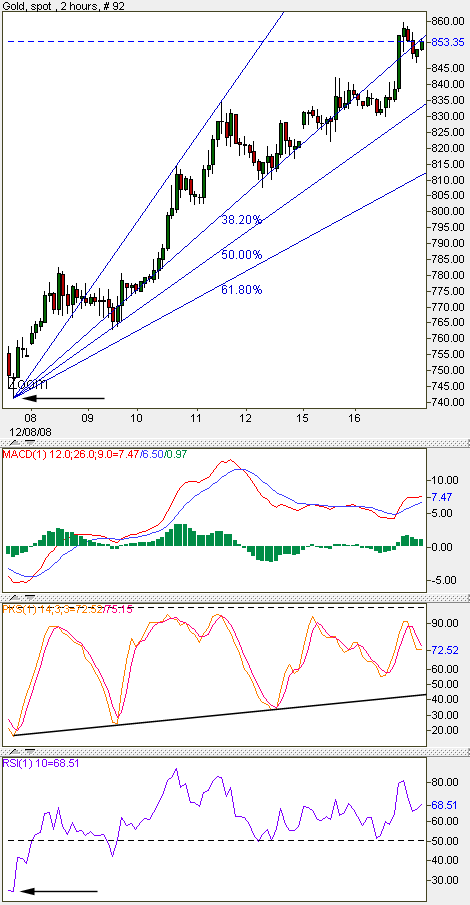
Spot gold, two hour interval
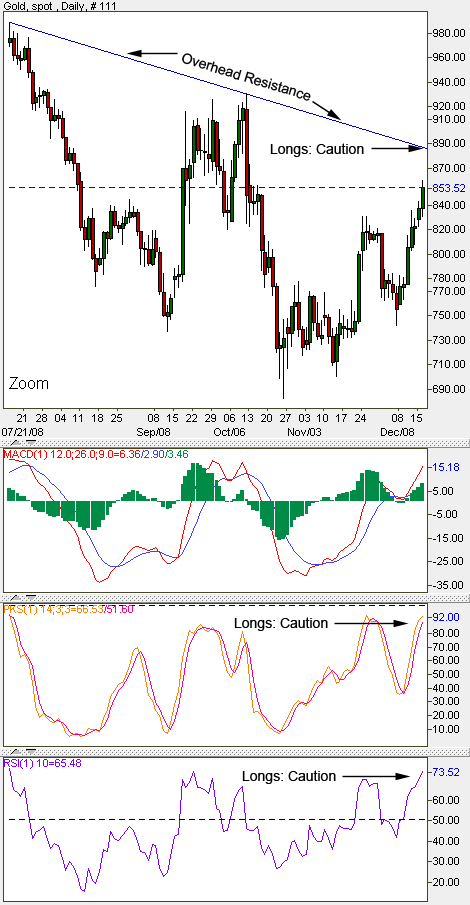
Spot gold, daily interval
Finally, congratulations to all of Cryptogon’s BullionVault clients from around the world who have been buying so heavily in recent weeks at much lower prices. Well done.
Via: Wall Street Journal:
The Federal Reserve cut its target interest rate Tuesday to historic lows between zero and a quarter percentage point and said it could expand a program of unorthodox lending and securities purchases.
After two days of discussion among Fed officials, the central bank said it would use every weapon from its arsenal to lift the U.S. from recession. It began by reducing its target interest rate — an overnight bank lending rate called the federal-funds rate — from 1%. Another Fed lending rate, the discount rate, will go to half a percentage point.
The cut was more than many economists expected, and the statement that came with it marked the latest signal by the Fed and its chairman, Ben Bernanke, that the central bank was prepared to take aggressive steps to revive the economy.
“The Federal Reserve will employ all available tools to promote the resumption of sustainable economic growth and to preserve price stability,” the Fed said in a statement. It added that it expected interest rates to remain “exceptionally” low for some time, a subtle commitment to the current policy that could help bring down longer-term interest rates.
In normal times, lower rates reduce the cost of borrowing for households, businesses and financial institutions, which spurs borrowing and economic activity. Those effects are being muted now, however, because many businesses and households are weighed down by heavy debts.
Still, stocks rallied on the news of the Fed’s action. The Dow Jones Industrial Average finished at 8924.14, up 359.61 points, or 4.2%, on the day. Treasury bonds rallied, sending their yields lower. Yields on 10-year Treasury notes hit 2.269%. The dollar sank against the euro and the yen.
A number of official borrowing rates — such as rates on three-month Treasury bills — have tumbled to near zero, a level they haven’t been near since the Great Depression.
President-elect Barack Obama used the Fed move as a rallying call for more fiscal stimulus, the idea of more government spending or tax cuts, which Fed officials support.
“We are running out of the traditional ammunition that’s used in a recession, which is to lower interest rates,” Mr. Obama said in a news conference. “They’re getting to be about as low as they can go. And although the Fed is still going to have more tools available to it, it is critical that the other branches of government step up.”
The trouble for Fed officials is that while official borrowing rates are very low, interest rates for borrowers with even a modicum of risk remain far above levels of a few months ago, which is squeezing the economy.
Beyond lowering interest rates, the central bank said it could expand lending programs, including a plan to buy mortgage-backed securities. The Fed also said it was studying such rescue measures as purchasing U.S. Treasury securities, which could help reduce long-term borrowing rates.
Sixteen months into a campaign to lift the U.S. economy from a gathering financial storm, the Fed’s efforts have so far failed. In the latest example of the deepening recession, the Commerce Department reported that new home building dropped 19% in November, to a seasonally adjusted annual rate of 625,000 units, a record monthly low.
Madoff’s “Auditing” Firm: Friehling & Horowitz, One Room Office, Three Employees
December 16th, 2008Via: Bloomberg:
The auditor for Bernard L. Madoff Investment Securities LLC, whose namesake was charged in a $50 billion Ponzi scheme last week, is under investigation by the district attorney in New York’s Rockland County, a northern suburb of New York City.
The New City, New York, auditing firm Friehling & Horowitz signed off on the annual financial statement of Madoff’s Manhattan-based investment advisory business through Oct. 31, 2006, according to a copy obtained by Bloomberg News.
Madoff was charged by federal prosecutors in Manhattan and sued by the U.S. Securities and Exchange Commission on Dec. 11. He told senior employees that the firm was insolvent and “had been for years,” prosecutors said in the criminal complaint. David Friehling, whose name is on the door to the store-front accounting office, hasn’t been charged.
“We’re trying to determine if there have been any state crimes here,” Rockland County District Attorney Thomas Zugibe said in a telephone interview yesterday. “When you have a key player like that operating in your county, you have to look.”
Friehling didn’t return calls for comment.
Zugibe said, among other things, he was probing to see whether any other Rockland-based businesses or other organizations might be affected.
“The implication is pretty broad,” Zugibe said.
Friehling is on the board of the JCC Rockland, a Jewish center in the county. He also is a past-president and a current board member of the Rockland chapter of the New York State Society of Certified Public Accountants.
Hedge Fund Adviser
Hedge fund investment adviser Aksia LLC warned clients last year not to put their money with Madoff after learning of “red flags” at his company, including that its books were audited by a three-person accounting firm.
Friehling & Horowitz included one partner in his late 70s who lives in Florida, a secretary, and one active accountant, Aksia said.
The copy of the four-page annual financial statement, dated Dec. 18, 2006, attested that the financial statements of Madoff’s securities firm were “in conformity with accounting principles generally accepted in the United States.”
The financial analysis said Madoff Securities had $1.3 billion in assets, including $711 million in marketable securities and $67 million in U.S. debt. Members’ equity, the firm’s net worth, was $604 million, according to the document.
The firm operates from a storefront office in the Georgetown Office Plaza in New City, New York, sandwiched between a pediatrician’s office and another medical office.
Leslie Cousar, who works in a nearby office, said on Dec. 12 that the man who comes to the auditor’s office does so for 10-to- 15 minute periods and leaves. She said he drives a Lexus and doesn’t dress in business attire.
The case is U.S. v. Madoff, 08-MAG-02735, U.S. District Court for the Southern District of New York (Manhattan).