Oil: New High Above $113
April 15th, 2008Oil prices flat since 2001… if priced in gold. HA
Via: AP:
Oil prices rose to new heights Tuesday, surging to almost $114 a barrel after the U.S. dollar fell and worries mounted about the global oil supply.
A report from the International Energy Agency said Russian oil production dropped this year for the first time in a decade. Crude oil shipments along one U.S. pipeline were said to be moving below capacity. And Italy’s ENI reported a 5,000 barrel per day reduction in production at one of its facilities in Nigeria.
UK: House Prices Fall at Fastest Rate Since 1978
April 15th, 2008Via: Guardian:
House prices are falling at their fastest rate since records began 30 years ago as the mortgage lending freeze continues to undermine the housing market, the Royal Institution of Chartered Surveyors says today.
In a big blow to the government, which claims Britain is well-placed to withstand the global economic downturn, the RICS paints a bleak picture, in which the number of estate agents saying house prices rose, rather than fell, has dropped to the lowest point since the survey began in 1978.
The latest monthly snapshot of the housing market shows that 78.5% more surveyors reported a fall than a rise in house prices. The gulf has widened since February and easily eclipses the previous low of 64.5% in June 1990, when the economy was heading into recession.
The survey comes amid growing government frustration with banks and mortgage lenders. Gordon Brown has summoned the heads of Britain’s top banks for breakfast meetings today, and while ministers still believe the housing situation is not as severe as the 1990s slump, they are concerned that some lenders are exploiting the global financial crisis.
Caroline Flint, the housing minister, will join forces with the chancellor, Alistair Darling, next week to step up pressure on Britain’s mortgage lenders to offer existing and new borrowers a fair deal. They will tell the Council of Mortage Lenders that buyers must be “treated fairly” and that people are not stretched beyond their means. The lenders will be told to ensure that “principles of responsible lending for customers are upheld and applied”.
Wachovia Resorts to Emergency Fundraising
April 15th, 2008Via: Guardian:
America’s fourth-largest bank, Wachovia, is raising $7bn (£3.52bn) through emergency fundraising as the subprime mortgage crisis in the US continues to reverberate through the banking sector.
Wachovia is raising the funds through public offerings of common and convertible preference stock after incurring a surprise $350m loss in the first quarter of 2008 compared with $2.3bn in profit a year earlier.
The news came today as two of the biggest names in Wall Street – Citigroup and Merrill Lynch – were poised to report huge write-downs because of the continuing credit crisis. Analysts are bracing themselves for total write-downs of $17bn when the two banks report their quarterly results later this week.
At North Carolina-based Wachovia, the loss was caused by a rise in provisions against loans which had turned sour, particularly mortgages hit in the housing downturn. These option adjustable rate mortgages begin with a low interest rate, which is then replaced by a heftier charge.
Wachovia’s chief executive, Ken Thompson, blamed the “precipitous decline in housing market conditions and unprecedented changes in consumer behaviour” for the figures.
Messy Symmetrical Triangle on U.S. Dollar Index Daily Interval
April 15th, 2008WARNING: This is not a recommendation to buy, sell or hold any financial instrument.
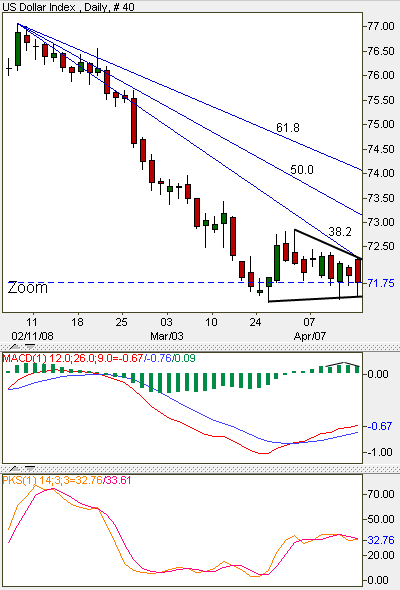
April U.S. Dollar Index, daily interval
The next leg down could be setting up. 71.34 is the all time low and the strategic support.
Any rally below 73 is, most likely, fake. At 73 it’s still constrained by the 50 fib fan overhead.
Fasten your seatbelt.
Retailing Chains Caught in a Wave of Bankruptcies
April 15th, 2008Via: New York Times:
The consumer spending slump and tightening credit markets are unleashing a widening wave of bankruptcies in American retailing, prompting thousands of store closings that are expected to remake suburban malls and downtown shopping districts across the country.
Since last fall, eight mostly midsize chains — as diverse as the furniture store Levitz and the electronics seller Sharper Image — have filed for bankruptcy protection as they staggered under mounting debt and declining sales.
But the troubles are quickly spreading to bigger national companies, like Linens ‘n Things, the bedding and furniture retailer with 500 stores in 47 states. It may file for bankruptcy as early as this week, according to people briefed on the matter.
Even retailers that can avoid bankruptcy are shutting down stores to preserve cash through what could be a long economic downturn. Over the next year, Foot Locker said it would close 140 stores, Ann Taylor will start to shutter 117 and the jeweler Zales will close 100.
The surging cost of necessities has led to a national belt-tightening among consumers. Figures released on Monday showed that spending on food and gasoline is crowding out other purchases, leaving people with less to spend on furniture, clothing and electronics. Consequently, chains specializing in those goods are proving vulnerable.
Retailing is a business with big ups and downs during the year, and retailers rely heavily on borrowed money to finance their purchases of merchandise and even to meet payrolls during slow periods. Yet the nation’s banks, struggling with the growing mortgage crisis, have started to balk at extending new loans, effectively cutting up the retail industry’s collective credit cards.
“You have the makings of a wave of significant bankruptcies,” said Al Koch, who helped bring Kmart out of bankruptcy in 2003 as the company’s interim chief financial officer and works at a corporate turnaround firm called AlixPartners.
“For years, no deal was too ugly to finance,” he said. “But now, nobody will throw money at these companies.”
IRS Audits of Big Companies Fall to All-Time Low
April 14th, 2008Via: TaxProfBlog:
The FY 2007 audit rate for the nation’s largest corporations has plunged to its lowest level in the last 20 years, less than half what it was in FY 1988 … The historic collapse in audits for the corporations with $250 million or more in assets was especially notable during the last two years when the rate dropped from 43% in FY 2005, to 34% in FY 2006 and then to an all-time low of 26% in FY 2007.
But along with the declining number of audits for the largest corporations, the IRS data point to a second significant finding: the thoroughness of these essential audits has been dropping. One example of this broad problem can be seen by the fact that the typical amount of time auditors spend on each of the large corporate audits is down by 20% over the last five years.
Food Riots ‘An Apocalyptic Warning’
April 14th, 2008Their headline, not mine.
Via: ABC:
Basic access to food is slipping out of reach for many people in developing countries.
The cost of the rice has risen by more than three-quarters in two months and the price of wheat has more than doubled in the same time.
The desperation in dozens of countries has turned deadly of late. In the past week alone there have been violent, food-related riots in Haiti, Indonesia, the Philippines and Cameroon.
World Vision Australia head Tim Costello says the situation is desperate and chronic.
“It is an apocalyptic warning,” he said. “Until recently we had plenty of food. The question was distribution.
“The truth is because of rising oil prices, global warming and the loss of arable land, all countries that can produce food now desperately need to produce more.”
U.S. Housing Collapse Spreads Overseas
April 14th, 2008Via: IHT:
The collapse of the housing bubble in the United States is mutating into a global phenomenon, with real estate prices down from the Irish countryside and the Spanish coast to Baltic seaports and even in parts of India.
This synchronized global slowdown, which has become increasingly stark in recent months, is hobbling economic growth worldwide, affecting not just homes, but also jobs.
In Ireland, Spain, Britain and elsewhere, housing markets that soared over the past decade are falling back to earth. Experts predict that some countries, like Ireland, will face an even more wrenching adjustment than the United States, with the possibility that the downturn could turn into wholesale collapse.
Monsanto’s Harvest of Fear
April 14th, 2008Must read… If you like the Horror genre.
Via: Vanity Fair:
Today, 37 years after PCB production ceased in Anniston, and after tons of contaminated soil have been removed to try to reclaim the site, the area around the old Monsanto plant remains one of the most polluted spots in the U.S.
People in Anniston find themselves in this fix today largely because of the way Monsanto disposed of PCB waste for decades. Excess PCBs were dumped in a nearby open-pit landfill or allowed to flow off the property with storm water. Some waste was poured directly into Snow Creek, which runs alongside the plant and empties into a larger stream, Choccolocco Creek. PCBs also turned up in private lawns after the company invited Anniston residents to use soil from the plant for their lawns, according to The Anniston Star.
So for decades the people of Anniston breathed air, planted gardens, drank from wells, fished in rivers, and swam in creeks contaminated with PCBs—without knowing anything about the danger. It wasn’t until the 1990s—20 years after Monsanto stopped making PCBs in Anniston—that widespread public awareness of the problem there took hold.
Studies by health authorities consistently found elevated levels of PCBs in houses, yards, streams, fields, fish, and other wildlife—and in people. In 2003, Monsanto and Solutia entered into a consent decree with the E.P.A. to clean up Anniston. Scores of houses and small businesses were to be razed, tons of contaminated soil dug up and carted off, and streambeds scooped of toxic residue. The cleanup is under way, and it will take years, but some doubt it will ever be completed—the job is massive. To settle residents’ claims, Monsanto has also paid $550 million to 21,000 Anniston residents exposed to PCBs, but many of them continue to live with PCBs in their bodies. Once PCB is absorbed into human tissue, there it forever remains.
U.S. Lenders Freeze Home Equity Credit Lines
April 14th, 2008Via: IHT:
It was the lending institutions and mortgage originators that got the United States into this credit mess, but it is the American consumers, taxpayers and those companies’ shareholders who will end up shouldering most of the costs.
The latest example of this is in the mass freezing of home equity lines of credit going on across the United States. Reeling from losses on their wretched loan decisions of recent years, lenders are preventing borrowers with pristine credit and significant equity in their homes from tapping into credit lines that they paid dearly to secure.
In the past 30 days, lenders have sent several hundred thousand letters advising borrowers that their home equity lines of credit are frozen, estimated Michael Kratzer, president of FeeDisclosure.com, a Web site intended to help consumers reduce fees on home loans.
Major lenders – including Washington Mutual, IndyMac Bank and the Greenpoint Mortgage Unit of Capital One – say that declining property values are prompting the decisions to cut off credit.
Banks have the right, of course, to rescind these credit lines at any time under the terms of the contracts they struck with borrowers. And as home prices have tumbled in many parts of the United States, banks are undoubtedly trying to protect themselves from exposure to additional losses.
But these actions are being taken even in areas where property prices are rising, Kratzer said. What’s worse, the letters provide no explanation for how the lenders determined that the property values underlying the equity lines had fallen.
Frozen home equity lines will surely intensify the consumer spending downturn and put added pressure on an already weak economy.




