OIL RECORD
September 18th, 2007Another eddy current to add to the perfect storm.
Via: IHT:
Oil prices climbed to a fresh high above US$81 a barrel amid hopes that the U.S. Federal Reserve will cut a key interest rate later Tuesday, a move the market believes would bolster the economy and strengthen petroleum demand in the world’s largest energy consumer.
Investors expect the Fed to cut the benchmark federal funds rate at least a quarter point to 5 percent to ease pressure on the U.S. credit market.
Collapsitalism: What I’d Keep in My Collapse Portfolio
September 18th, 2007WARNING: This is not a recommendation to buy, sell or hold any financial instrument.
NOTE: I am a BullionVault client and affiliate. I have no relationship with Everbank. I have no relationship with Powershares. I hold gold, U.S. dollars and New Zealand dollars.
– – – – –
Becky and I don’t have much money to worry about, but some Cryptogon readers do. This is an email I wrote to one of Cryptogon’s most generous supporters in response to her question about asset preservation during a financial crisis. I’m posting this because it might help others of you who have significant assets and are looking for ideas. If Becky and I had substantial financial assets that weren’t allocated to property or preparations, this is what we would do.
I don’t include allocation percentages because those will vary widely according to each individual’s risk tolerance.
This is a slightly edited version of my email message:
Of course, any decision is up to you, and only you are responsible for the outcomes, good or bad, but I would be very careful with the foreign currencies. It has to be done right, with diversification kept in mind at all times. Currencies are considered “speculation” meaning maximum risk.
Diversification. Diversification. Diversification.
I would get an Everbank (Everbank WorldCurrency CDs) professional involved. Consider a basket of currencies that provide you with a mix of security and yield.
Currencies to consider for security and strategic cash hedges:
Swiss Franc
Euro
U.S. Dollar
To understand this in greater detail, see: Making Sense Of The Euro/Swiss Franc Relationship. In summary, by holding these three currencies, you’re pretty much going to go… nowhere! Which is the point of trying to hold onto what you have.
Since you’re going mostly nowhere on your U.S. dollar, Euro and Swiss franc holdings, consider adding high yielding / higher risk currencies:
Icelandic krona — Pure gamble for highest yield
New Zealand dollar — Commodity based gamble
South African rand — Commodity based gamble
Consider the unlikely event that the U.S. dollar will rally (rise) sharply. Because it seems impossible, you should assume it will happen. This is why you keep one foot in the stinky, filthy USD pool, just in case. Even with the U.S. Dollar Index under 80 and the wheels coming off the cart. YOU NEVER KNOW WHAT WILL HAPPEN. That thing could gap right back up. That’s ok, you’re covered with your plain-jane FDIC insured CDs.
Now, what’s the problem with each and every currency out there?
That’s right, they’re all fiat, based-on-nothing ponzi schemes.
Consider positions in gold and food.
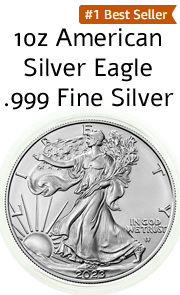
I like BullionVault for my gold needs, but if you are confident with your security situation, take personal, physical possession of your metal. If taking personal physical possession, pay cash at a dealer who doesn’t want to know your name. American Eagles are, by far, the standard for Americans. Canadian Maples are good too.
Keep in mind, the U.S. has outlawed gold possession before. That’s right, diversification again, in terms of geography this time. Maybe take personal, physical possession of some and keep some in Switzerland with BullionVault.
Now, food. Check out the PowerShares DB Agriculture ETF:
This is a simple way of betting that prices of corn, soy beans, sugar and wheat will rise. If you think prices of these staples is going to rise, this might be worth considering. This isn’t heavily leveraged like buying the underlying futures contracts. It moves much slower because of the lower leverage on the ETF.
If the crash is hard (grid down, no Internet, total collapse, mad max, etc) none of the above matters. In a hard crash, it’s the same old same old:
Shelter, water, food, and security/community.
Ok, that’s the best information I have to offer, and how I’d do it if it was me.
Best,
Kevin
Question Kerry About Skull and Bones Membership, Get Tased
September 18th, 2007Via: Youtube:
U.S. Treasury Secretary: Prepare for Prolonged Turmoil
September 18th, 2007Does anyone understand the French connection here?
Via: Times Online:
Investors should brace themselves for a prolonged period of market turmoil, Henry Paulson, the US Treasury Secretary, said yesterday as he held emergency meetings with the Chancellor and the French Finance Minister.
Mr Paulson flew to London to discuss the financial crisis with Alistair Darling as markets remained in the grip of anxieties over the continuing toll from the global credit squeeze.
Speaking after talks with his counterparts in France and Britain, Mr Paulson insisted that the global economy remained strong despite the seizures in interbank lending, but admitted that the American economy would take a knock from the turmoil.
After meeting Christine Lagarde, the French Finance Minister, Mr Paulson said: “It will take a while to work through the turbulence in capital markets.â€
EMERGENCY: U.K. GOVERNMENT TO COVER 100% OF DEPOSITS
September 18th, 2007WARNING: This is not a recommendation to buy, sell or hold any financial instrument.
An overnight shift in policy from covering roughly £30,000 worth of deposits to 100% of deposits!?
Sterling holders, consider reducing or eliminating your exposure to GBP denominated assets immediately.
If a bank CEO tells me not to panic, I’d remove my funds from that bank as soon as posible. If a government changes the rules, in desperation, in the middle of a crisis, I don’t hold that country’s currency anymore. (Get back to me when, not if, this happens to New Zealand.)
The British government’s guarantee might seem like good news to the average Sterling holder, but think about how the government would guarantee those funds, in practice.
Printing presses.
What’s different about today vs. the past is that the mask is off this scam in the UK now and the government is struggling to obscure how ugly the monster really is. Maybe the PR campaign, which amounts to a Jedi mind trick, will work. Maybe not.
If the herd doesn’t buy it… I don’t know what will happen next. Banking holidays? Martial law provisions to govern GBP FOREX flows? Let’s not go there just yet, but for the handful of GBP holders who read Cryptogon, consider taking immediate defensive action. [Here’s a private email that I wrote to one of Cryptogon’s top contributors who was looking for ideas on asset preservation during financial emergencies. It might be useful for people affected by the UK crisis.]
P.S. If the smoke clears and the British people are holding Euros, ordo ab chao, my friend.
Via: Guardian:
Alistair Darling yesterday moved to take control of the biggest banking crisis in years with a full guarantee of deposits at Northern Rock that left the system for dealing with bank collapses in tatters.
After another day of turmoil on the high street which saw savers besieging Northern Rock branches across the UK, the chancellor threw out rules that had been in place since 2001 in an attempt to stem the worst banking crisis since the 1970s.
It was unclear whether the chancellor’s statement would lessen queues outside Northern Rock branches today, however, the chancellor’s decision was backed by the Treasury select committee chairman John McFall, who told the BBC’s Newsnight programme: “The Bank of England has done the right thing here.”
In full-page advertisements appearing in many national newspapers this morning, the Northern Rock’s chief executive Adam Applegarth said: “The simple fact now is that the chancellor has made it clear that all existing Northern Rock deposits are fully backed by the Bank of England and are totally secure during the current instability in the financial markets.
As Alliance & Leicester and Bradford & Bingley shares plunged by 31% and 15% respectively in late trading yesterday, Mr Darling was forced to add that if another bank was to arrange an emergency lending facility with the Bank of England and was declared solvent by the FSA, the government would be willing to extend its full deposit guarantee plan.
UPDATE #1: Independent: “Almost Too Shocking to Contemplate”:
Will last night’s further commitment from Alistair Darling, the Chancellor, to put in place arrangements that would guarantee all the existing deposits of Northern Rock over and above that already offered by the deposit protection scheme operated by the Financial Services Authority do the trick?
First, let’s examine the quite breathtaking implications of an announcement which on a quick ring round the City last night was widely thought to be without precedent. It is one thing to guarantee the £24bn of deposits held by Northern Rock in the hope that this might calm nerves and convince depositors that they don’t any longer need to queue round the block in the pouring rain to get their money out. The Government wouldn’t be doing it unless it thought Northern Rock essentially solvent and therefore ultimately of no risk to the taxpayer.
Yet if the authorities are to underwrite Northern Rock, the implication is that they stand behind the entire UK banking system. Any government that is prepared to guarantee the creditors of one bank must surely offer the same facility to everyone else?
In the event of a more generalised run on UK banks, it would be in no position to provide such support. The sums involved would overwhelm the ability of the tax system to pay, or indeed the money printing presses to cope. The Bank of England’s position as lender of last resort would be stretched to breaking point.
What at first, then, seems like no more than a neat trick to restore confidence in Northern Rock on reflection looks much more high-risk. Mr Darling had better hope it works. If it is Alliance & Leicester, or worse, one of the big high-street banks, which next comes calling, cap in hand, then it won’t be just his job that’s on the line – the Government’s entire future would be at risk.
In order to implement his guarantee, Mr Darling would, in the event of a continued run on Northern Rock, in effect have to nationalise the mortgage bank by taking both its assets and its liabilities on to the Bank of England’s own books. What are the consequences for the public finances of that? Again, the implications are almost too shocking to contemplate. What if it doesn’t work? What if there are runs on other banks? Will the Government then nationalise Alliance & Leicester (A & L), Bradford & Bingley, and others too?
UPDATE #2: Telegraph: Darling’s Risky Plan Needs to Succeed:
By guaranteeing all the existing savings in Northern Rock accounts, he has left an indelible mark on Britain’s financial system — whether he succeeds or fails in stopping the run on the bank.
advertisement
Of course, everyone with an interest in Britain’s economic health should hope he does succeed.
If his message gets out, he has a good chance. The Chancellor has explicitly told savers at Northern Rock that their money is entirely safe left in their accounts.
The hope is that this brings to an end the scenes of the past few days, with thousands of account-holders queueing for hours to withdraw their savings.
This, in turn, will help arrest the dramatic decline in Northern Rock’s share price, which continued again yesterday with a 35 per cent plunge. A little period of calm will be enough to help Northern Rock to organise its sale to another bank — surely the best option available to the struggling institution. Things may eventually get back to normal, with the only side-effect for the economy being a period of slower growth.
However, even if this, the best of all outcomes, is the result, things have still changed forever.
Mr Darling may be saving the banking system as a whole from an even worse crisis in the coming weeks, preventing a swathe of lenders from going bust. But by laying down such a precedent, he also risks encouraging other banks to make precisely the mistakes made by Northern Rock.
The fuse for Northern Rock’s near-demise may have been lit by the credit crunch, which made it difficult for it to fund itself, but the company has no one but itself to blame for strapping the financial dynamite around its waist — gearing itself up with so much debt.
Mr Darling is effectively sending the message that other banks will be bailed out — and all their accounts protected — even if they take similar or greater risks with their customers’ and shareholders’ money.
…
What if the Chancellor’s plan fails? The mind boggles. If the queues outside Northern Rock continue the next risk is that other banks fall victim to the crisis. Alliance & Leicester, whose shares plummeted late yesterday, is thought to be particularly vulnerable to a run. And as the Government has already played its most powerful hand, it will be effectively powerless to stop the fear building.
The financial world is built on trust and confidence. If Mr Darling’s adrenaline injection doesn’t help revive these two factors, no one really knows what happens next.
The Chancellor’s plan is high-risk. By the end of today it will be clear whether it has succeeded.
UPDATE #3: Telegraph: Sterling Poised for Weakness as Northern Rock Crisis Deepens:
The crisis unfolding at Northern Rock pushed sterling lower today and analysts now expect the currency to face serious pressure in coming weeks.
Alliance & Leicester Denies Problems After Shares Plunge
September 18th, 2007Remember the roughly $1 billion dollar bet that the Eurostoxx 50 index would decline sharply in September? Those put options expire on the 21st.
What follows is almost certainly worthless rambling, but I’m going to do it anyway, just in case:
Let’s assume that the option bet isn’t simply cost-of-doing-business hedging for some large fund.
I couldn’t help wondering if someone is standing upwind of a large pile of dry brush and trying to strike a match with this Alliance & Leicester thing.
I’ve seen it happen before on a single stock (AMZN) at option expiration. But the mystery trader needs an entire basket of stocks to crash, not just couple. Even I have to stretch my tinfoil a bit thin at the prospect.
Outside of a false flag operation, I tried to think of an event that could deliver the necessary result for the mystery trader.
There’s only one thing that I could think of, given the timing: the Fed rate decision. The markets have priced in a 100% chance that the Fed will cut rates, the only question is, will it be 1/4 or 1/2 of a point?
I’m absolutely not saying that this is likely to happen, but a Fed rate hike would have roughly the same effect as a bomb going off in global equity markets. Many banks would be decapitated on the spot from the resulting loss of liquidity.
Anyone who trades knows that insiders know the news before it hits. Read my piece about spotting irregular activity on stocks for more detail on this. What just happened on Alliance & Leicester is kind of the same thing, but short. What’s the key to the move? It happened on no news specific to Alliance & Leicester, which might mean, someone already knows the news that isn’t news just yet. Again, read about Dow theory and the distribution phase; in summary, insiders bail while the sheep get slaughtered.
Of course, it wouldn’t take much to spark a sell off on U.K. bank shares these days. In this climate, a sufficiently deep pocketed market maker would just have to start the ball rolling. It’s like standing on the right side of a flock of sheep and clapping your hands if you want them to move to the left. It doesn’t take much effort and look at the result.
In any event, the next few days are going to be very interesting.
Sorry for the confusing ramble. It’s almost certainly all or mostly wrong, which convinced me to focus on it a bit. I routinely run Devil’s Advocate exercises in my head, but I don’t usually write the raw output down.
Via: Guardian:
Fears that Alliance & Leicester would be forced to seek emergency funding from the Bank of England heightened yesterday after it lost more than a third of its value on the London stock market.
A massive sale of the bank’s shares prompted speculation it was the latest victim of the credit squeeze that has brought international money markets to a standstill and sparked the collapse in confidence at Northern Rock, Britain’s fifth largest mortgage lender.
$1 billion dollars after placing 245,000 put options on the Dow Jones Eurostoxx 50 index
Article continues
Alliance & Leicester is the next largest mortgage bank with 5.5m customers, but denied it could suffer the same fate.
In a statement after the stock market closed, it said: “We have not approached the Bank of England for assistance. We have a very different business model to Northern Rock, and our funding is not overly reliant on wholesale markets.”
Banks lend to each other on the wholesale money markets. In the wake of the US sub-prime mortgage crisis they have dramatically restricted their lending, fearing that some banks have a black hole in their accounts.
Alliance & Leicester shares dropped by 31%, or 273p, to 600p in the last minutes of trading which, combined with the falls at Northern Rock, dragged the FTSE 100 index down 102.4 points to 6186.9.
A spokesman for the bank said he “knew of no reason why the shares fell”.
Blackwater’s License to Operate in Iraq Has Been Cancelled Following Atrocity
September 17th, 2007Via: AFP:
Iraq has ordered the cancellation of the operating licence of US security firm Blackwater after it was involved in a shootout in Baghdad that killed eight people, a senior official told AFP on Monday.
Blackwater offers personal security to US officials working in Iraq.
“The interior minister (Jawad al-Bolani) has issued an order to cancel Blackwater’s licence and the company is prohibited from operating anywhere in Iraq,” interior ministry director of operations Major General Abdel Karim Khalaf said.
“We have opened a criminal investigation against the group who committed the crime.”
On Sunday, a US diplomatic convoy was involved in a shootout in Baghdad’s Al-Yarmukh neighbourhood which killed at least eight people and wounded 13 others.
Iraqi Prime Minister Nuri al-Maliki condemned what he called the “criminal” response of the contractors guarding the convoy which Washington’s mission in Baghdad said had come under attack from insurgents.
“Prime Minister Nuri al-Maliki condemns and strongly denounces the criminal operation committed by one of the foreign security companies in Al-Nissur Square,” said a statement from Maliki’s office quoted by state television.
The US convoy came under attack on Sunday while it was travelling past Al-Nissur Square in the Al-Yarmukh neighbourhood of west Baghdad, Iraqi security officials said.
The private security contractors accompanying the convoy returned fire.
According to the security officials, nine people were killed and 15 wounded. Khalaf confirmed eight people dead, including a policeman, and 13 wounded.
Most of the dead and wounded were bystanders, the officials said.
Greenspan Says Euro Could Replace U.S. Dollar as Reserve Currency of Choice
September 17th, 2007Via: International Herald Tribune:
Former U.S. Federal Reserve chairman Alan Greenspan said it is possible that the euro could replace the U.S. dollar as the reserve currency of choice.
According to an advance copy of an interview to be published in Thursday’s edition of the German magazine Stern, Greenspan said that the dollar is still slightly ahead in its use as a reserve currency, but added that “it doesn’t have all that much of an advantage” anymore.
The euro has been soaring against the U.S. currency in recent weeks, hitting all-time high of US$1.3927 last week as the dollar has fallen on turbulent market conditions stemming from the ongoing U.S. subprime crisis. The Fed meets this week and is expected to lower its benchmark interest rate from the current 5.25 percent.
Greenspan said that at the end of 2006, some 25 percent of all currency reserves held by central banks were held in euros, compared to 66 percent for the U.S. dollar.
In terms of being used as a payment for cross-border transactions, the euro is trailing the dollar only slightly with 39 percent to 43 percent.
NORTHERN ROCK SHARES HALTED
September 17th, 2007Can’t sell your Northern Rock shares? Try again later.
Via: Reuters:
Shares of Northern Rock PLC, one of Britain’s largest mortgage lenders, tumbled another 30 percent Monday as customers, driven by fears of insolvency, made a run on the bank and withdrew billions.
Treasury Secretary Alistair Darling sought to assure depositors that their money was safe, even as former U.S. Federal Reserve Board chairman Alan Greenspan warned of difficulties ahead in Britain’s booming housing market.
Trading in the bank’s shares was briefly suspended Monday morning, but not before they tumbled 140 pence to 298 pence ($2.81 to $5.98), on top of a 31 percent fall Friday. By late morning, shares hovered around 300 pence.
Northern Rock, Britain’s fifth-largest mortgage lender, disclosed on Friday that it had received emergency funding from the Bank of England after other banks balked at loaning it cash in the wholesale money markets.
More Than One Million Iraqis Killed Since U.S. Invasion
September 17th, 2007I see that O.J. is top news again.
Via: ORB:
In the week in which General Patraeus reports back to US Congress on the impact the recent ‘surge’ is having in Iraq, a new poll reveals that more than 1,000,000 Iraqi citizens have been murdered since the invasion took place in 2003.
Previous estimates, most noticeably the one published in the Lancet in October 2006, suggested almost half this number (654,965 deaths).
These findings come from a poll released today by ORB, the British polling agency that has been tracking public opinion in Iraq since 2005. In conjunction with their Iraqi fieldwork agency a representative sample of 1,499 adults aged 18+ answered the following question:-
QHow many members of your household, if any, have died as a result of the conflict in Iraq since 2003 (ie as a result of violence rather than a natural death such as old age)? Please note that I mean those who were actually living under your roof.
None 78%
One 16%
Two 5%
Three 1%
Four or more 0.002%
Given that from the 2005 census there are a total of 4,050,597 households this data suggests a total of 1,220,580 deaths since the invasion in 2003.
Detailed analysis (which is available on our website) indicates that almost one in two households in Baghdad have lost a family member, significantly higher than in any other area of the country. The governorates of Diyala (42%) and Ninewa (35%) were next.
The poll also questioned the surviving relatives on the method in which their loved ones were killed. It reveals that 48% died from a gunshot wound, 20% from the impact of a car bomb, 9% from aerial bombardment, 6% as a result of an accident and 6% from another blast/ordnance.
More: A Deafening Silence on Report of One Million Iraqis Killed Under U.S. Occupation