Why Amazon’s Data Centers Are Hidden in Spy Country
March 2nd, 2017Yeah, I guess you’d be nuts to think that Amazon built out infrastructure in this area to be in close proximity to CIA. That’s just a coincidence, as usual:
The fact that northern Virginia is home to major intelligence operations and to major nodes of network infrastructure isn’t exactly a sign of government conspiracy so much as a confluence of histories (best documented by Paul Ceruzzi in his criminally under-read history Internet Alley: High Technology In Tysons Corner, 1945-2005). To explain why a region surrounded mostly by farmland and a scattering of American Civil War monuments is a central point of Internet infrastructure, we have to go back to where a lot of significant moments in Internet history take place: the Cold War.
Via: The Atlantic:
Northern Virginia is a pretty convenient place to start a cloud-services business: for reasons we’ll get into later, it’s a central region for Internet backbone. For the notoriously economical and utilitarian Amazon, this meant that it could quickly set up shop with minimal overhead in the area, leasing or buying older data centers rather than building new ones from scratch.
Lithium Ion Like Battery with 3X the Energy Density, Sodium Glass Electrolyte
March 1st, 2017Disclosure: I sell solar power systems in New Zealand.
—
I’ll reiterate the usual warning when posting about battery technology “breakthroughs.”
Laboratory experiments have virtually nothing to do with finished products that you and I can buy. Indeed, DO NOT hold your breath waiting for this. That said, it’s VERY interesting, if you’re like me and follow energy storage news daily.
If you want a minimum ten year, non toxic battery based on sodium today, Aquion is it. However, Aquion technology is big and heavy—it’s for fixed energy storage applications only.
The researchers below are trying to get rid of the big and heavy characteristics.
I’ll post the entire piece below, as stories like this have a tendency to quietly disappear.
One other thing:
This research is supported by UT Austin, but there are no grants associated with this work.
Fascinating. Here’s the chart from, Trump Seeks U.S. Military Spending Boost, Domestic Cuts:
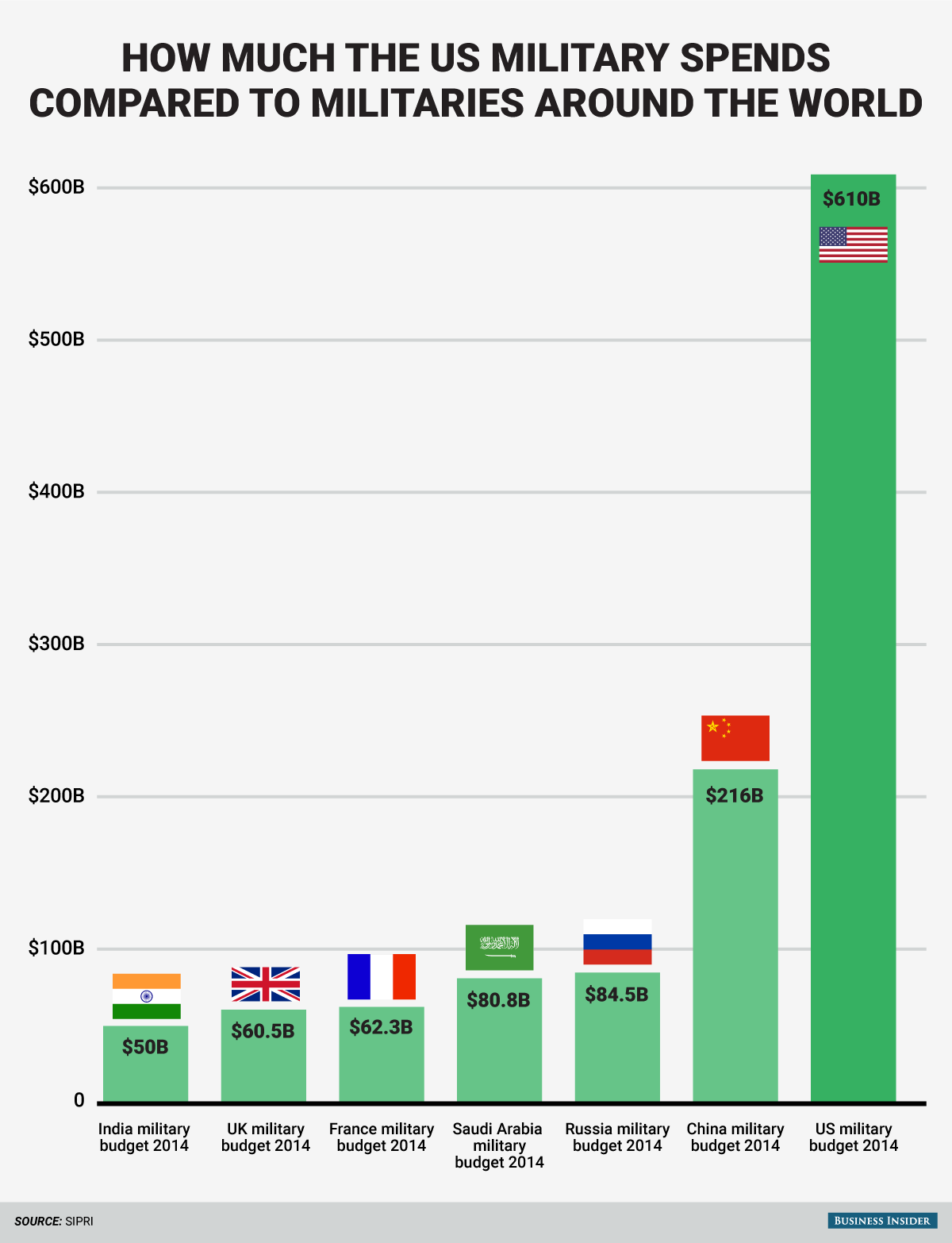
You know, because…

Via: The University of Texas at Austin:
Feb. 28, 2017
AUSTIN, Texas — A team of engineers led by 94-year-old John Goodenough, professor in the Cockrell School of Engineering at The University of Texas at Austin and co-inventor of the lithium-ion battery, has developed the first all-solid-state battery cells that could lead to safer, faster-charging, longer-lasting rechargeable batteries for handheld mobile devices, electric cars and stationary energy storage.
Goodenough’s latest breakthrough, completed with Cockrell School senior research fellow Maria Helena Braga, is a low-cost all-solid-state battery that is noncombustible and has a long cycle life (battery life) with a high volumetric energy density and fast rates of charge and discharge. The engineers describe their new technology in a recent paper published in the journal Energy & Environmental Science.
“Cost, safety, energy density, rates of charge and discharge and cycle life are critical for battery-driven cars to be more widely adopted. We believe our discovery solves many of the problems that are inherent in today’s batteries,” Goodenough said.
The researchers demonstrated that their new battery cells have at least three times as much energy density as today’s lithium-ion batteries. A battery cell’s energy density gives an electric vehicle its driving range, so a higher energy density means that a car can drive more miles between charges. The UT Austin battery formulation also allows for a greater number of charging and discharging cycles, which equates to longer-lasting batteries, as well as a faster rate of recharge (minutes rather than hours).
Today’s lithium-ion batteries use liquid electrolytes to transport the lithium ions between the anode (the negative side of the battery) and the cathode (the positive side of the battery). If a battery cell is charged too quickly, it can cause dendrites or “metal whiskers” to form and cross through the liquid electrolytes, causing a short circuit that can lead to explosions and fires. Instead of liquid electrolytes, the researchers rely on glass electrolytes that enable the use of an alkali-metal anode without the formation of dendrites.
The use of an alkali-metal anode (lithium, sodium or potassium) — which isn’t possible with conventional batteries — increases the energy density of a cathode and delivers a long cycle life. In experiments, the researchers’ cells have demonstrated more than 1,200 cycles with low cell resistance.
Additionally, because the solid-glass electrolytes can operate, or have high conductivity, at -20 degrees Celsius, this type of battery in a car could perform well in subzero degree weather. This is the first all-solid-state battery cell that can operate under 60 degree Celsius.
Braga began developing solid-glass electrolytes with colleagues while she was at the University of Porto in Portugal. About two years ago, she began collaborating with Goodenough and researcher Andrew J. Murchison at UT Austin. Braga said that Goodenough brought an understanding of the composition and properties of the solid-glass electrolytes that resulted in a new version of the electrolytes that is now patented through the UT Austin Office of Technology Commercialization.
The engineers’ glass electrolytes allow them to plate and strip alkali metals on both the cathode and the anode side without dendrites, which simplifies battery cell fabrication.
Another advantage is that the battery cells can be made from earth-friendly materials.
“The glass electrolytes allow for the substitution of low-cost sodium for lithium. Sodium is extracted from seawater that is widely available,” Braga said.
Goodenough and Braga are continuing to advance their battery-related research and are working on several patents. In the short term, they hope to work with battery makers to develop and test their new materials in electric vehicles and energy storage devices.
This research is supported by UT Austin, but there are no grants associated with this work. The UT Austin Office of Technology Commercialization is actively negotiating license agreements with multiple companies engaged in a variety of battery-related industry segments.
Congress Told to Brace for ‘Robotic Soldiers’
March 1st, 2017In other news:
Via: The Hill:
House lawmakers were warned Wednesday that artificial intelligence could soon be used by potential adversaries in military operations.
Jason Healey, a senior fellow on the Atlantic Council’s Cyber Statecraft Initiative, told members of a House panel with oversight of the Pentagon that he expects the capabilities to be developed in the next decade.
“There has been lot of speculation … about how soon it will be before robotic soldiers take the place of the fight in the kinetic world,” Rep. Mike Conaway (R-Texas) asked the panel of cyber experts. “How soon will A.I. supplant the need … for all these human beings to be able to defend these networks and do what we do?”
Healey answered that he expects the capability to be developed more quickly than anticipated.
Peter Singer, a strategist at the New America Foundation, said that artificial intelligence is among potential “disruptions” being developed in the realm of cyber conflict.
“It’s not just when is it going to happen, but we don’t yet know is it going to privilege the offense or defense, what are going to be the affects of it,” Singer said, recommending that Congress hold a classified hearing on where the U.S. stands in comparison to likely adversaries on this capability.
“We don’t want to fall behind,” he said.
‘Facebook Artificial Intelligence Spots Suicidal Users’
March 1st, 2017The Facebook bots will also be used to, “Identify posts by terrorists among other concerning content.”
Mmm hmm.
Via: BBC:
Facebook has begun using artificial intelligence to identify members that may be at risk of killing themselves.
The social network has developed algorithms that spot warning signs in users’ posts and the comments their friends leave in response.
After confirmation by Facebook’s human review team, the company contacts those thought to be at risk of self-harm to suggest ways they can seek help.
A suicide helpline chief said the move was “not just helpful but critical”.
The tool is being tested only in the US at present.
It marks the first use of AI technology to review messages on the network.
Founder Mark Zuckerberg announced last month that he also hoped to use algorithms to identify posts by terrorists among other concerning content.
Research Credit: Jb
All New Taxis in Beijing Must Be Electric
March 1st, 2017Great, now don’t charge them with electricity generated by burning coal.
Via: National Business Daily:
All newly added or replaced taxies in the city of Beijing will be converted from gasoline to electricity, according to a draft work program on air pollution control for Beijing, Tianjin, Hebei, and surrounding areas in 2017.
Trump Open to Legal Status for Some Undocumented Immigrants in Sharp Departure from Campaign Stance
February 28th, 2017Just after the election, I wrote, “What’s he going to do? Deploy the U.S. Marines to places like Santa Ana and wide swaths of Los Angeles County? Good luck with that.”
Maybe someone finally convinced him that mass roundups would go very badly.
Via: CNBC:
President Donald Trump said Tuesday he is open to legal status for some undocumented immigrants and may call for a compromise immigration bill in his speech to a joint session of Congress.
“The time is right for an immigration bill if both sides are willing to compromise,” Trump told reporters.
It is not clear what exactly Trump would want to see in the bill or that he would definitely seek new legislation. Still, his remark signals a stark shift from the crackdown on illegal immigration he promised on the campaign trail and has sought through his actions as president so far.
Trump said he would be open to legal status for undocumented immigrants who have not committed serious crimes. They would not need to leave the country first.
Trump Seeks U.S. Military Spending Boost, Domestic Cuts
February 27th, 2017Mmm hmm.
Via: Reuters:
President Donald Trump is seeking what he called a “historic” increase in defense spending, but ran into immediate opposition from Republicans in Congress who must approve his plan and said it was not enough to meet the military’s needs.
The proposed rise in the Pentagon budget to $603 billion comes as the United States has wound down major wars in Iraq and Afghanistan and remains the world’s strongest military power.
The plan came under fire from Democratic lawmakers, who said cuts being proposed to pay for the additional military spending would cripple important domestic programs such as environmental protection and education.
A White House budget official, who outlined the plan on a conference call with reporters, said the administration would propose “increasing defense by $54 billion or 10 percent.” That represents the magnitude of the increase over budget caps Congress put in place in 2011.
But Mick Mulvaney, the White House budget director, said the plan would bring the Pentagon’s budget to $603 billion in total, just 3 percent more than the $584 billion the agency spent in the most recent fiscal year, which ended on Sept. 30, 2016.
The rise would be slightly higher than the country’s current 2.5 percent rate of inflation.
RCMP Commissioner Warns Continued IT Failures Will Have ‘Catastrophic’ Consequences
February 27th, 2017Via: CBC:
Canada’s top cop is warning that ongoing computer network failures and slipshod service from Shared Services Canada could have “catastrophic” consequences for police and the public.
CBC News has obtained a blistering Jan. 20, 2017, memo to Public Safety Minister Ralph Goodale in which Commissioner Bob Paulson details how critical IT failures have increased by 129 per cent since the beleaguered department took over tech support for the entire government five years ago.
Not only that, the memo says, the duration of each outage has increased by 98 per cent.
“Its ‘one size fits all’ IT shared services model has negatively impacted police operations, public and officer safety and the integrity of the criminal justice system,” reads the memo.
The document appears to respond to a request for more information after a series of CBC News reports on the RCMP’s long-standing dissatisfaction with Shared Services Canada (SSC).
Despite the agency’s creation of special teams and committees to address shoddy service and repeated computer outages, Paulson said minimal progress has been made.
DHS Quietly Testing Mandatory Facial Recognition of Passengers *Exiting* U.S.
February 27th, 2017Via: Professional Troublemaker:
We’re all used to having to identify ourselves as we enter a country. It is the only way we can hope to have any attempt at a secure border. But, so-called “exit controls,” where documents are checked as travelers are leaving the country, were popularized last century by Nazi Germany as a great way to ensure that they could control, round up, and exterminate the Jews and other “undesirables.” It can obviously serve no purpose of keeping terrorists out, because it only affects those who are already in. The U.S. has never had exit controls, although they remain popular in Europe, Russia, and China.
Last week, privacy advocate and blogger Jeffrey Tucker posted his experience before a flight from Atlanta to Mexico:
Halfway down the jetbridge, there was a new layer of security. Two US Marshals, heavily armed and dressed in dystopian-style black regalia, stood next to an upright machine with a glowing green eye. Every passenger, one by one, was told to step on a mat and look into the green scanner. It was scanning our eyes and matching that scan with the passport, which was also scanned (yet again).
Boston Dynamics: Handle
February 27th, 2017Via: Boston Dynamics:
Handle is a research robot that stands 6.5 ft tall, travels at 9 mph and jumps 4? ?feet vertically. ?It uses electric power to operate both electric and hydraulic actuators, with a range of about 15 miles on one battery charge. ???Handle uses many of the same dynamics, balance and mobile manipulation principles? found in the quadruped and biped robots we build, but with only about 10 actuated joints, it is significantly less complex. Wheels are efficient on flat surfaces while legs can go almost anywhere: by combining wheels and legs Handle can have the best of both worlds.




