December Earnings
January 25th, 2012December earnings totaled $2034.28, which is an astonishing result. The U.S. Amazon commission alone was $1025.08 (529 items shipped on revenue of just over $15K!). Many thanks to everyone who sent funds directly and/or conducted business via affiliate links in December. Thanks also to everyone who helped to keep Cryptogon open and free to all in 2011.
And Now… Precrime Red Spot Lights
January 25th, 2012Via: AP:
The police department in the city of East Orange, New Jersey is installing red spotlights to remotely shine on those police believe are about to commit a crime.
Google Admits It Will Track Everything Its Users Do, No Opt Out
January 25th, 2012In other words, Google now admits doing things that Cryptogon readers have known it has been doing for about a decade: Tracking everything.
Via: Washington Post:
Google said Tuesday it will follow the activities of users across e-mail, search, YouTube and other services, a shift in strategy that is expected to invite greater scrutiny of its privacy and competitive practices.
The information will enable Google to develop a fuller picture of how people use its growing empire of Web sites. Consumers will have no choice but to accept the changes.
The policy will take effect March 1 and will also impact Android mobile phone users, who are required to log in to Google accounts when they activate their phones.
Cryptogon Is Now an Affiliate for Portable Solar Power
January 25th, 2012If you’re looking for very high quality, portable PV equipment, check out portablesolarpower.biz.
72w Thin Film Folding Portable Solar Panel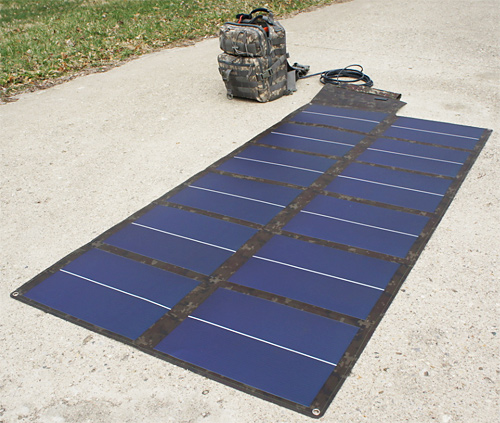
In addition to generating and storing electricity, they also have some very impressive lighting options.
15w 12v Waterproof LED Light + Magnetic Flexi Mounting System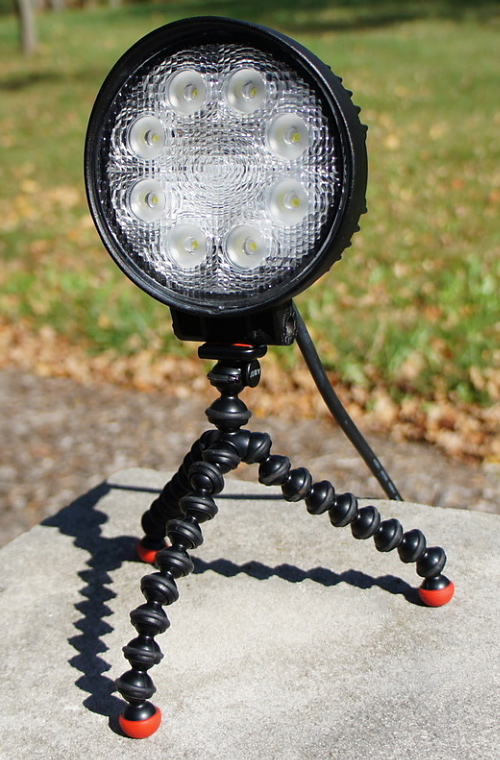
I know that several Cryptogon readers are now living on yachts full time. There’s a desalination system that fits in a large Pelican case available for sale as well.
If you need a custom solution, talk to Ryan Brown, the owner. He works with preppers and personally asked me to become an affiliate for his business.
Cryptogon earns 10% on your purchases.
The Secret Facebook of Power
January 24th, 2012Via: Register:
“It wasn’t secret, we just didn’t need to tell anyone about it” said Sid Heaslip, Programme manager at Opentext discussing the TOP SECRET FACEBOOK OF POWER that his company made for the G20 summit in 2010, exclusively for the leaders of the world’s most powerful nations to network with.
Despite keeping the network codenamed “V20” under wraps at the time, Opentext execs are now keen to discuss the world’s most elite social network, not least because the aura of power and secrecy around the summit gives their cloud-based document-sharing software a little more sex appeal than the average cloud-based document sharing software package enjoys.
Opentext spoke about their G20 social network last week at a conference in London where they were meeting public sector players in an attempt to get them interested in their social work-flow solutions.
The Facebook of Power
At the Toronto based G20 summit in 2010, the men and women holding the purse strings of the world were forced to get on the Facebook-style network to access documents and communicate with each other, because email was strictly banned. Only 125 members were accepted – the finance and deputy finance ministers of the twenty countries along with a “sherpa” or guide for each member state. 55 of them decided to upload profile pictures too, giving the financial negotiations a more personal touch. It’s highly likely that the remaining 60-odd invites were parcelled out to the global premiers, which means that it is likely, though not certain Barack Obama was/is on there.
Users on the network were able to upload documents, read documents, message each other, blog, have live instant message conversations and see who was talking about topics they were interested in.
“The idea is that there are communities around concepts – in the case of the G20 that could be where to stay in Toronto but it could also be hey – we’ve got this climate change summit coming up what are we going to do about it,” said Heaslip.
A “pyramid of privacy” allowed users to finely grade how widely they shared information. Opentext turned the software around in 3 months.
It’s not just global power-mongers who like to share documents on secure cloud-based software, it is used by other SECRET people, the Register was informed.
“Lots of the world’s most private and high security organisations use our software. Behind the barbed wire and high fences, these organisations need to communicate within themselves,” Simon Lill, OpenText head of sales told the Reg.
“We have several customers who require very secure networks.”
But these customers are so secret that he couldn’t tell us who they were.
Research Credit: luky
Judge Orders Defendant to Decrypt Laptop
January 24th, 2012Update: She Doesn’t Remember Her Password
Well, duh.
Via: Wired:
A Colorado woman ordered to decrypt her laptop so prosecutors may use the files against her in a criminal case might have forgotten the password, the defendant’s attorney said Monday.
The authorities seized the Toshiba laptop from defendant Ramona Fricosu in 2010 with a court warrant while investigating alleged mortgage fraud. Ruling that the woman’s Fifth Amendment rights against compelled self-incrimination would not be breached, U.S. District Judge Robert Blackburn ordered the woman in January to decrypt the laptop.
“It’s very possible to forget passwords,” the woman’s attorney, Philip Dubois, said in a telephone interview. “It’s not clear to me she was the one who set up the encryption on this drive. I don’t know if she will be able to decrypt it.”
—End Update—
Via: Wired:
A judge on Monday ordered a Colorado woman to decrypt her laptop computer so prosecutors can use the files against her in a criminal case.
The defendant, accused of bank fraud, had unsuccessfully argued that being forced to do so violates the Fifth Amendment’s protection against compelled self-incrimination.
“I conclude that the Fifth Amendment is not implicated by requiring production of the unencrypted contents of the Toshiba Satellite M305 laptop computer,” Colorado U.S. District Judge Robert Blackburn ruled Monday.
New Category on The Pirate Bay: Physibles
January 24th, 2012Via: The Pirate Bay:
New category.
We’re always trying to foresee the future a bit here at TPB. One of the things that we really know is that we as a society will always share. Digital communication has made that a lot easier and will continue to do so. And after the internets evolutionized data to go from analog to digital, it’s time for the next step.
Today most data is born digitally. It’s not about the transition from analog to digital anymore. We don’t talk about how to rip anything without losing quality since we make perfect 1 to 1 digital copies of things. Music, movies, books, all come from the digital sphere. But we’re physical people and we need objects to touch sometimes as well!
We believe that the next step in copying will be made from digital form into physical form. It will be physical objects. Or as we decided to call them: Physibles. Data objects that are able (and feasible) to become physical. We believe that things like three dimensional printers, scanners and such are just the first step. We believe that in the nearby future you will print your spare sparts for your vehicles. You will download your sneakers within 20 years.
The benefit to society is huge. No more shipping huge amount of products around the world. No more shipping the broken products back. No more child labour. We’ll be able to print food for hungry people. We’ll be able to share not only a recipe, but the full meal. We’ll be able to actually copy that floppy, if we needed one.
We believe that the future of sharing is about physible data. We’re thinking of temporarily renaming ourselves to The Product Bay – but we had no graphical artist around to make a logo. In the future, we’ll download one.
Foxconn Apologizes for CEO Referring to Workers as ‘Animals’
January 24th, 2012Via: AFP:
Taiwan technology giant Foxconn has apologised over comments by chief Terry Gou allegedly comparing workers to animals, according to a report.
Gou drew criticism on online news forums and discussion sites after he was quoted by Taiwanese media as saying “I have a headache how to manage one million animals” at the company’s year-end party in Taipei Zoo earlier this month.
Foxconn is the largest maker of computer components and assembles products for Apple — including the iPhone — plus Sony and Nokia. It employs about one million workers in China.
Related: Why High Tech Manufacturing Jobs Aren’t Coming Back to the U.S.
More Le Roy Students Struck with ‘Mystery Illness,’ Parents Demand More Tests
January 24th, 2012Homeland Security Wants to Spy on 4 Square Miles at Once
January 24th, 2012Via: Wired:
It’s not just for the Afghanistan and Iraq wars anymore. The Department of Homeland Security is interested in a camera package that can peek in on almost four square miles of (constitutionally protected) American territory for long, long stretches of time.
Homeland Security doesn’t have a particular system in mind. Right now, it’s just soliciting “industry feedback” on what a formal call for such a “Wide Area Surveillance System” might look like. But it’s the latest indication of how powerful military surveillance technology, developed to find foreign insurgents and terrorists, is migrating to the home front.
The Department of Homeland Security says it’s interested in a system that can see between five to 10 square kilometers — that’s between two and four square miles, roughly the size of Brooklyn, New York’s Bedford-Stuyvesant neighborhood — in its “persistent mode.” By “persistent,” it means the cameras should stare at the area in question for an unspecified number of hours to collect what the military likes to call “pattern of life” data — that is, what “normal” activity looks like for a given area. Persistence typically depends on how long the vehicle carrying the camera suite can stay aloft; DHS wants something that can fit into a manned P-3 Orion spy plane or a Predator drone — of which it has a couple. When not in “persistent mode,” the cameras ought to be able to see much, much further: “long linear areas, tens to hundreds of kilometers in extent, such as open, remote borders.”
If it’s starting to sound reminiscent of the spy tools the military has used in Iraq and Afghanistan, it should. Homeland Security wants the video collected by the system to beam down in “near real time” — 12 seconds or quicker — to a “control room (T) or to a control room and beyond line of sight (BLOS) ruggedized mobile receiver on the ground,” just as military spy gear does. The camera should shift to infrared mode for nighttime snooping, and contain “automated, real time, motion detection capability that cues a spotter imager for target identification.” Tests for the system will take place in Nogales, Arizona.




