Have We Gone From a Post-War to a Pre-War World?
July 13th, 2014Via: Huffington Post:
On June 28, 1914, a chauffeur panicked after a failed bomb attack on his boss, took a wrong turn and came to a complete stop in front of a café in Sarajevo where Gavrilo Princip was sitting. Princip, discouraged at the apparent failure of the planned murder, seized the unexpected opportunity and fired the shots that began the First World War, a cataclysm which claimed over nine million lives, ended four empires and set in motion events from the Communist Revolution in Russia to the rise of Nazi Germany.
One hundred years later, the world is nervously keeping its eyes peeled for misguided chauffeurs and asking itself whether history could repeat. The great powers are at peace, and trade and cultural ties between nations seem closer than ever before, yet the international scene is in many ways surprisingly brittle. In particular, a rising naval power is challenging an established hegemon, and a “powder keg” region replete with ethnic and religious quarrels looks less stable by the day.
In 1914, Germany was the rising power, the U.K. the weary hegemon and the Balkans was the powder keg. In 2014, China is rising, the United States is staggering under the burden of world leadership and the Middle East is the powder keg.
Only a few years ago, most western observers believed that the age of geopolitical rivalry and great power war was over. Today, with Russian forces in Ukraine, religious wars exploding across the Middle East, and territorial disputes leading to one crisis after another in the East and South China seas, the outlook is darker. Serious people now ask whether we have moved from a post-war into a pre-war world. Could some incident somewhere in the world spark another global war?
Research Credit: ottilie
Amazon Quietly Rolling Out Sunday Delivery
July 13th, 2014Via: GeekWire:
After starting in selected cities around the country, Amazon and the U.S. Postal Service are closer to rolling out Sunday parcel delivery on a nationwide scale.
In recent weeks, Sunday delivery has launched in Seattle and Portland, and various other cities are potentially only weeks from going live — including the Boston area and a huge swath of California, including San Francisco and Silicon Valley.
GeekWire made dozens of phone calls to post offices across the country to confirm that the service is coming soon, in an apparent push that puts the rollout ahead of expectations. Separately, the U.S. Postal Service provided an updated list of markets where Sunday delivery is provided. Although incomplete, it includes other surprising areas of coverage, such a San Diego and Washington, D.C. (the full list can be found below).
Research Credit: ottilie
Asian Slave Labor Producing Seafood for Supermarkets in US, UK
July 13th, 2014Via: Guardian:
Slaves forced to work for no pay for years at a time under threat of extreme violence are being used in Asia in the production of seafood sold by major US, British and other European retailers, the Guardian can reveal.
A six-month investigation has established that large numbers of men bought and sold like animals and held against their will on fishing boats off Thailand are integral to the production of prawns (commonly called shrimp in the US) sold in leading supermarkets around the world, including the top four global retailers: Walmart, Carrefour, Costco and Tesco.
The investigation found that the world’s largest prawn farmer, the Thailand-based Charoen Pokphand (CP) Foods, buys fishmeal, which it feeds to its farmed prawns, from some suppliers that own, operate or buy from fishing boats manned with slaves.
Men who have managed to escape from boats supplying CP Foods and other companies like it told the Guardian of horrific conditions, including 20-hour shifts, regular beatings, torture and execution-style killings. Some were at sea for years; some were regularly offered methamphetamines to keep them going. Some had seen fellow slaves murdered in front of them.
Fifteen migrant workers from Burma and Cambodia also told how they had been enslaved. They said they had paid brokers to help them find work in Thailand in factories or on building sites. But they had been sold instead to boat captains, sometimes for as little as £250.
Research Credit: ottilie
Banks Dreading Computer Hacks Call for Cyber War Council
July 13th, 2014Via: Bloomberg:
Wall Street’s biggest trade group has proposed a government-industry cyber war council to stave off terrorist attacks that could trigger financial panic by temporarily wiping out account balances, according to an internal document.
The proposal by the Securities Industry and Financial Markets Association, known as Sifma, calls for a committee of executives and deputy-level representatives from at least eight U.S. agencies including the Treasury Department, the National Security Agency and the Department of Homeland Security, all led by a senior White House official.
The trade association also reveals in the document that Sifma has retained former NSA director Keith Alexander to “facilitate” the joint effort with the government. Alexander, in turn, has brought in Michael Chertoff, the former U.S. Secretary of Homeland Security, and his firm, Chertoff Group.
The document sketches an unusually frank and pessimistic view by the industry of its readiness for attacks wielded by nation-states or terrorist groups that aim to “destroy data and machines.” It says the concerns are “compounded by the dependence of financial institutions on the electric grid,” which is also vulnerable to physical and cyber attack.
“The systemic consequences could well be devastating for the economy as the resulting loss of confidence in the security of individual and corporate savings and assets could trigger widespread runs on financial institutions that likely would extend well beyond the directly impacted banks, securities firms and asset managers,” Sifma wrote in the document, dated June 27.
Research Credit: alvinroast
Iraq Tells U.N. that ‘Terrorist Groups’ Seized Nuclear Materials
July 13th, 2014Via: Reuters:
Insurgents in Iraq have seized nuclear materials used for scientific research at a university in the country’s north, Iraq told the United Nations in a letter appealing for help to “stave off the threat of their use by terrorists in Iraq or abroad.”
Nearly 40 kilograms (88 pounds) of uranium compounds were kept at Mosul University, Iraq’s U.N. Ambassador Mohamed Ali Alhakim told U.N. Secretary-General Ban Ki-moon in the July 8 letter obtained by Reuters on Wednesday.
“Terrorist groups have seized control of nuclear material at the sites that came out of the control of the state,” Alhakim wrote, adding that such materials “can be used in manufacturing weapons of mass destruction.”
“These nuclear materials, despite the limited amounts mentioned, can enable terrorist groups, with the availability of the required expertise, to use it separate or in combination with other materials in its terrorist acts,” said Alhakim.
He warned that they could also be smuggled out of Iraq.
A U.S. government source familiar with the matter said the materials were not believed to be enriched uranium and therefore would be difficult to use to manufacture into a weapon. Another U.S. official familiar with security matters said he was unaware of this development raising any alarm among U.S. authorities.
Research Credit: P7y845W4
Storm
July 8th, 2014Update 7: Pictures
Solar Power Inverter: Grid Failure

Neighbors packed cars into our place to avoid flooding
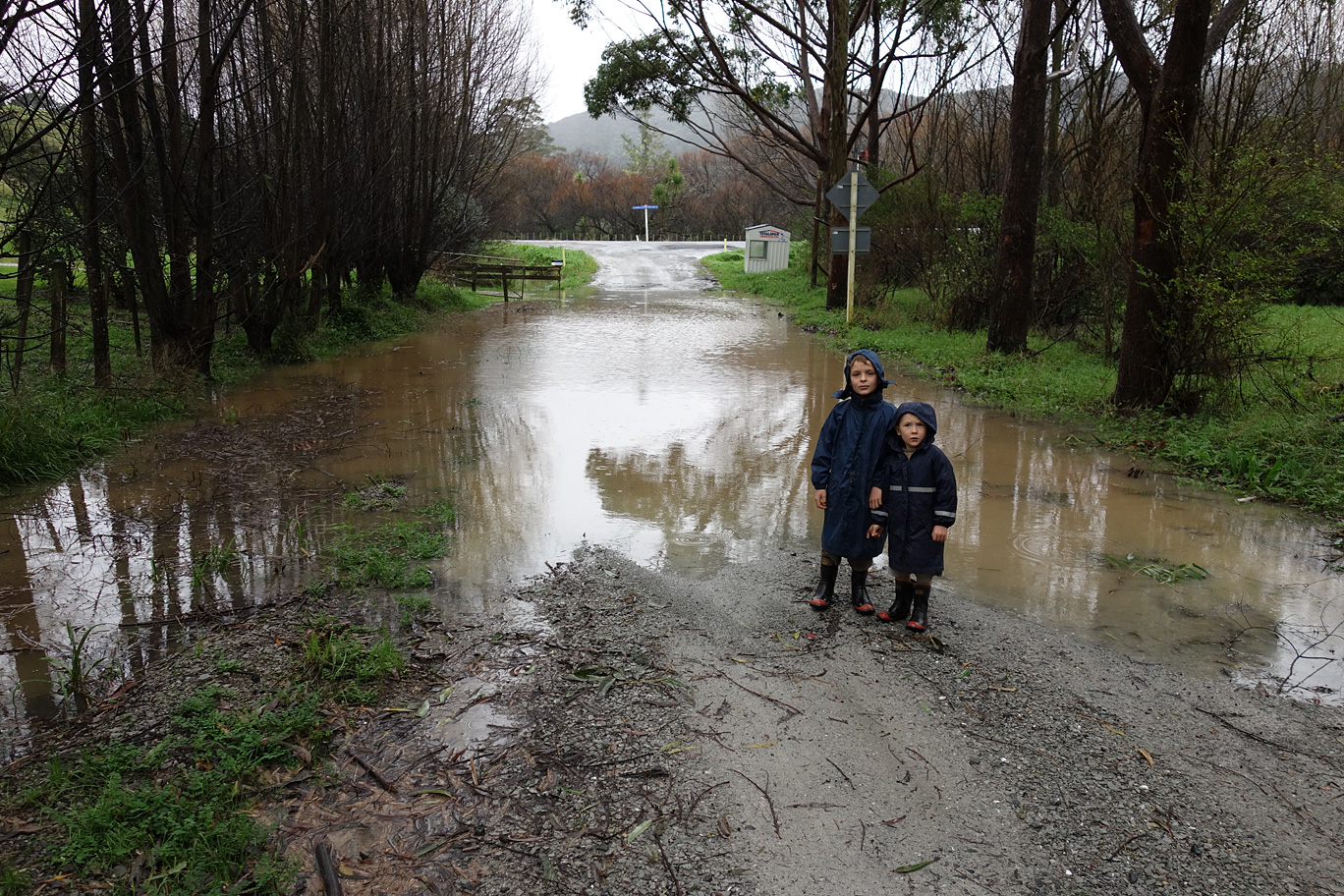
Flood going down
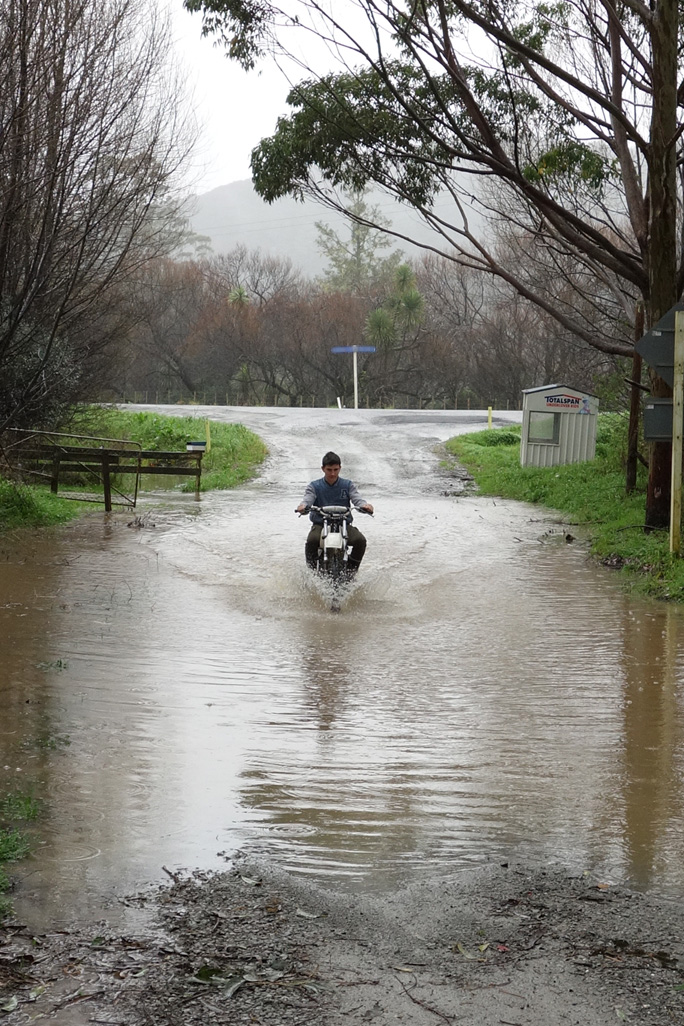
Neighbor goes for it
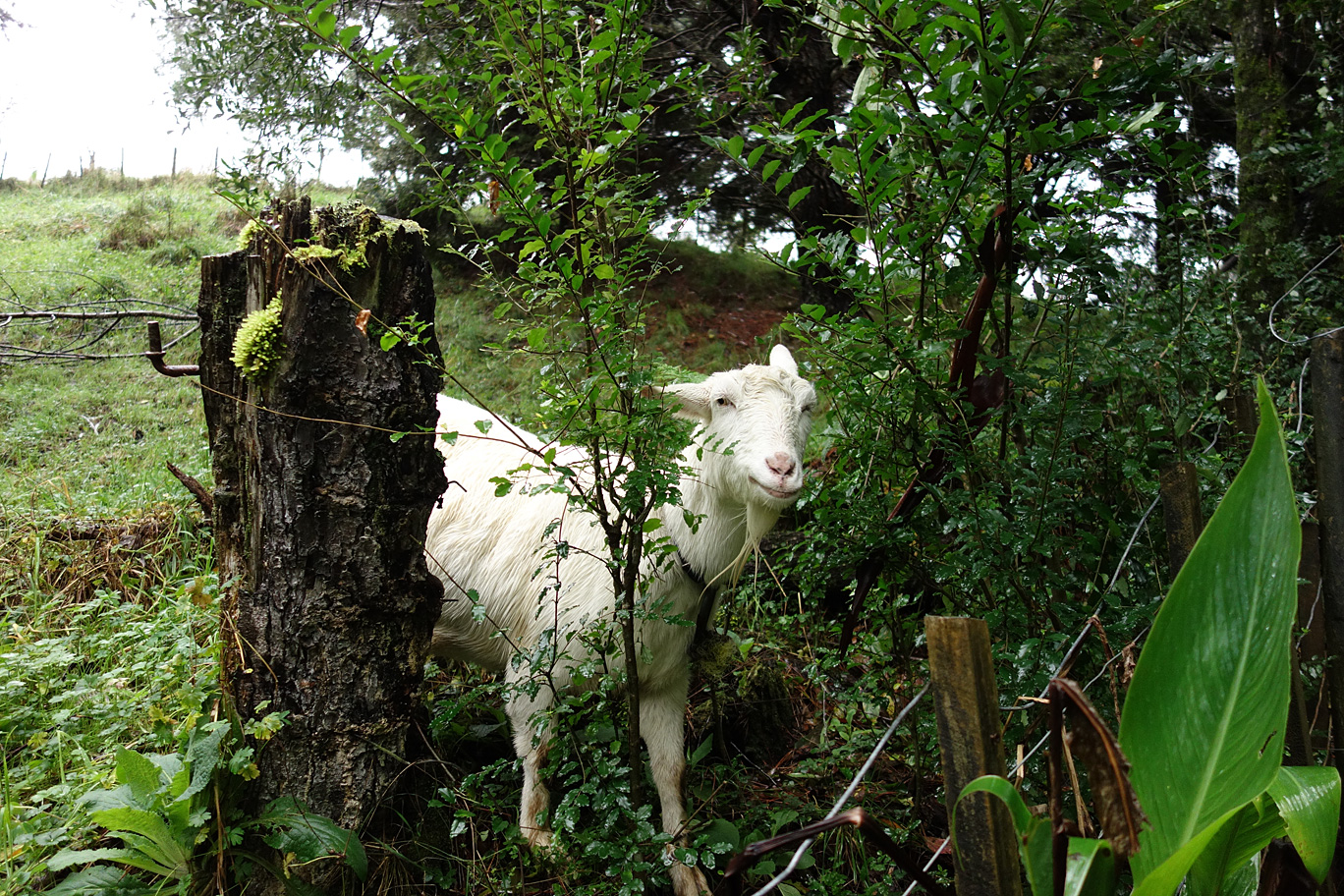
Flood or no flood, our goat is still a dodgy beast
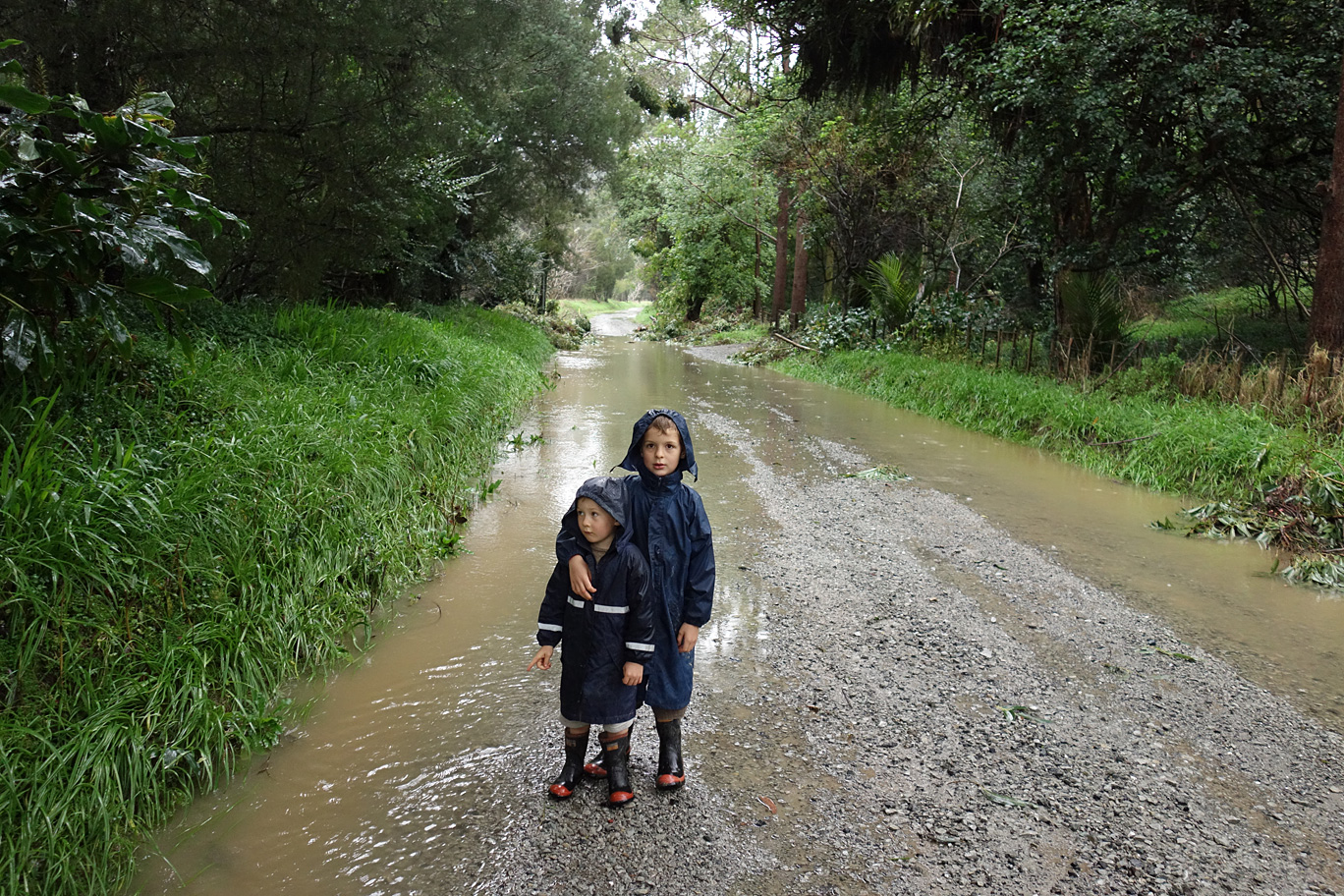
Up the road a bit more
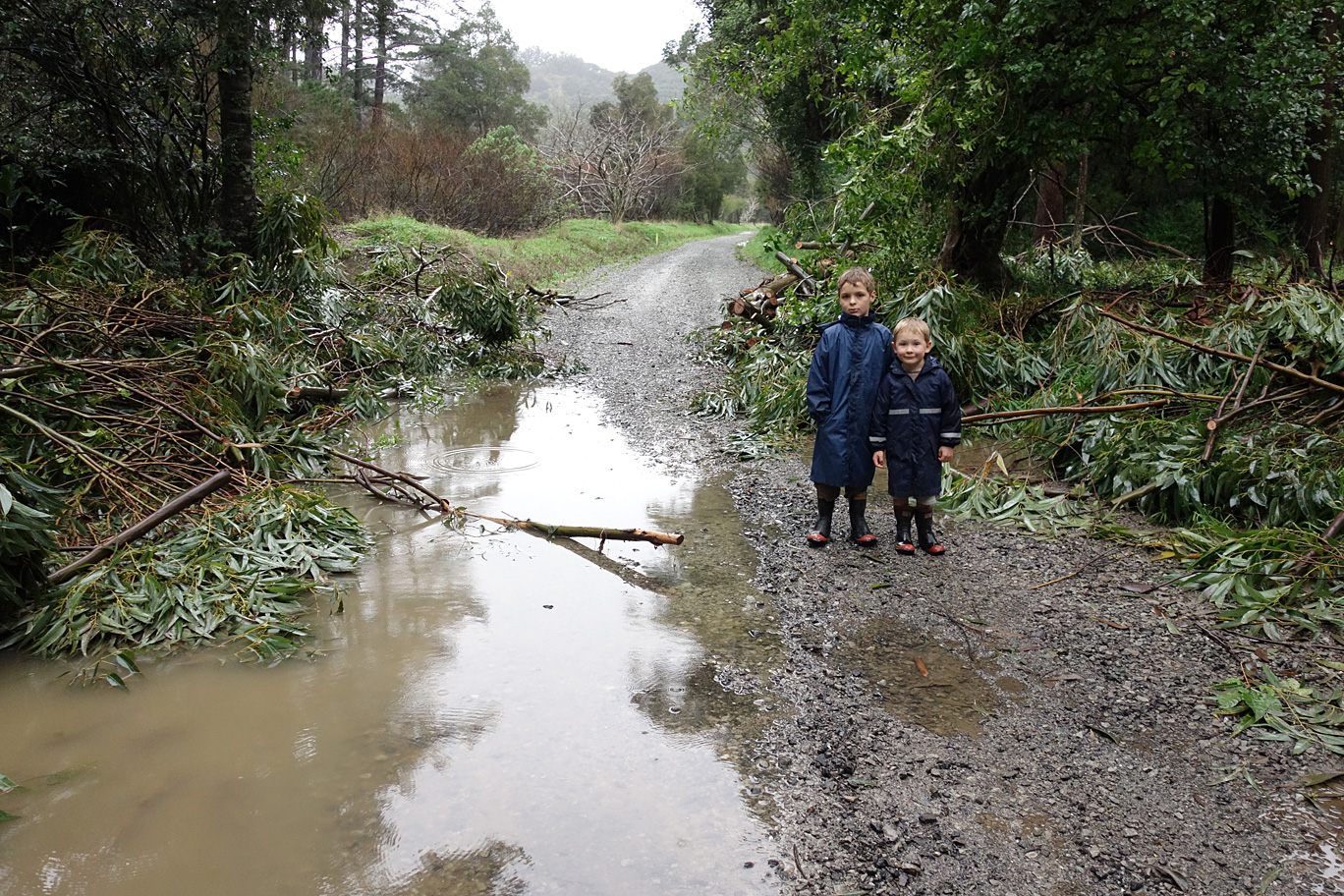
The council came through and ran some chainsaws for a while
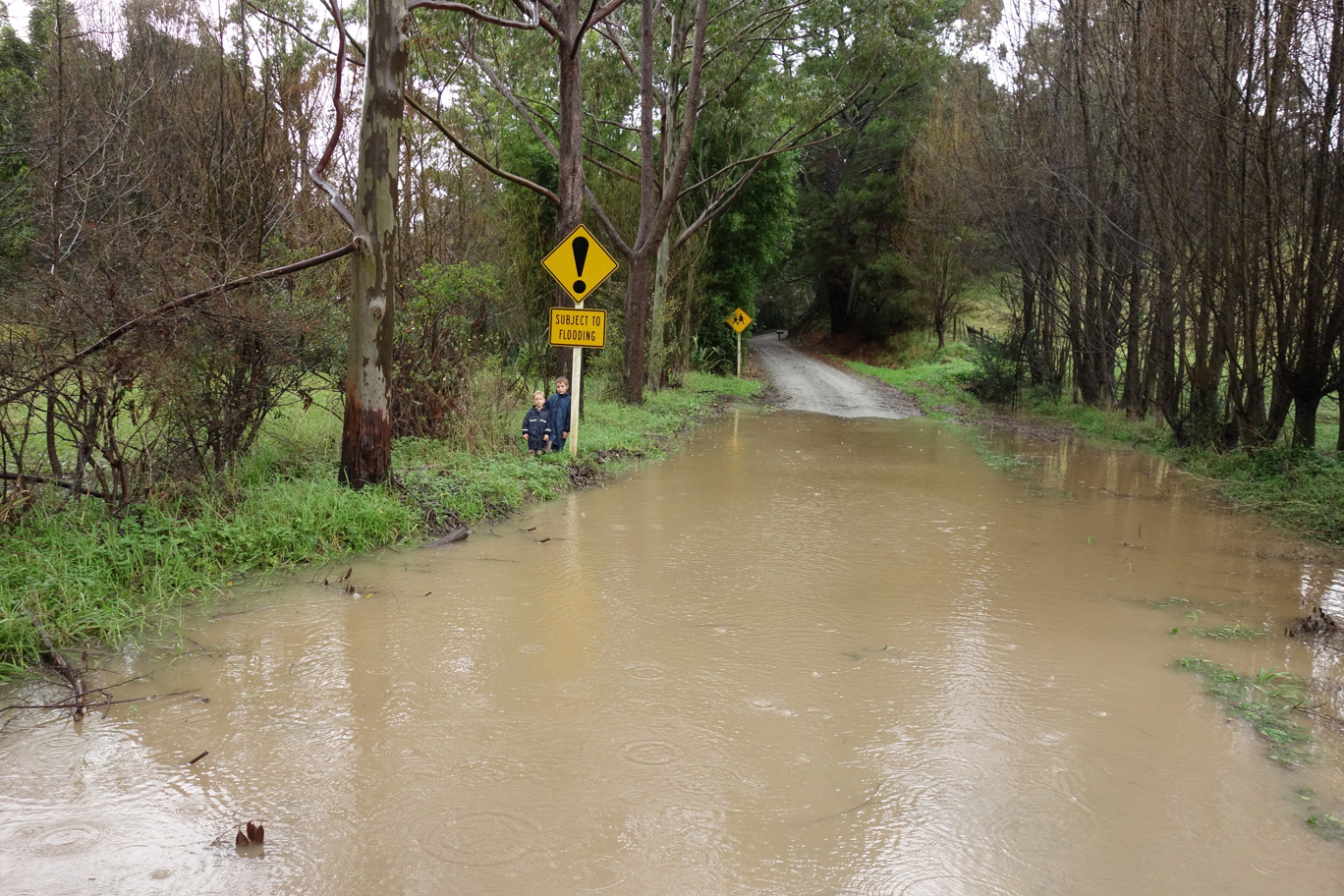
Tail end of flood, imagine the whole road as a raging river
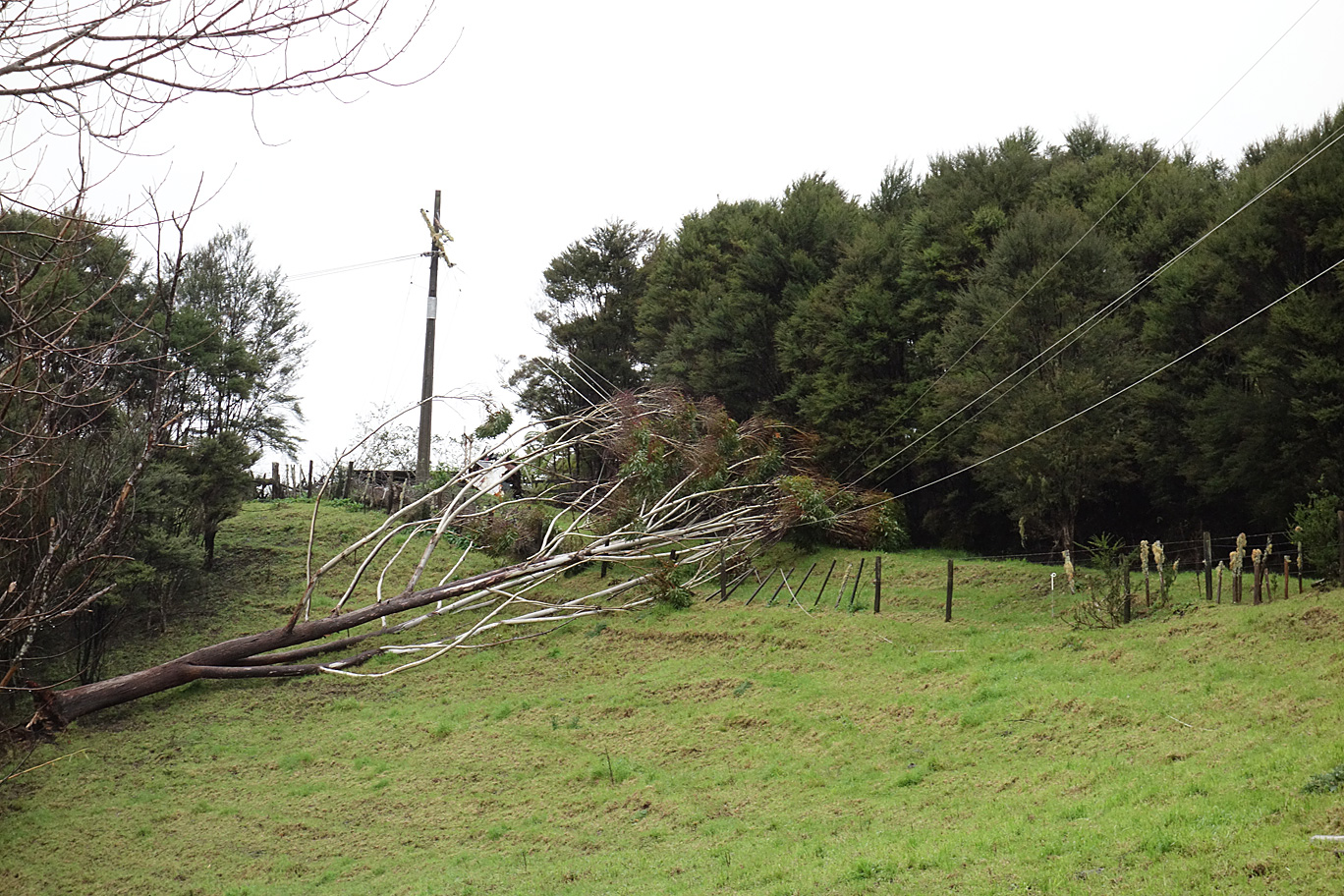
We didn’t hold our breathes waiting for this to get sorted out

Reed made a wicked face over the mud situation, but he sill liked playing in it
—
Update 6: Sunday night NZ time and the electricity is finally back on. Well, that was definitely the longest power outage I’ve ever gone through.
You know how I say that our area is in the Do-Last-If-At-All category—Well, maybe not. There are still a few places without power up here, but we were in a pretty exclusive club. At the peak, it was 16000 households (half of the total served by Top Energy) without power. The last update I saw this afternoon had the total number of houses without power at 450 and ours was still out. So, not-quite-last.
I’m going to post some regular Cryptogon stories now, but I’ll post a final update here with a few pics when I get some time.
—
Update 5: Top Energy is finally on the scene out here (Sunday morning NZ time). Becky went to talk to them. Power might be back on by tonight. My guess is tomorrow at the earliest. Do last if at all… Everyone else we know has their juice back on already.
—
Update 4: It finally stopped raining this morning. Power still out. Tree still over power lines up our valley. No sign of power company vehicles or aircraft.
—
Update 3: Power is still out. There is a large tree over a powerline further up our valley. As you know, our valley is in the do last if at all category. So… Estimates are still Sunday/Monday NZ time, but don’t count on it.
—
Update 2: It’s a grid down situation up here. Estimates for restoration of electricity range from Friday to Monday NZ time. Propane and Fenix flashlights are good things. T + C thankfully didn’t get water in their house.
—
Update 1: Power has been out for about seven hours now and anyone trying to use our road at this point would need a boat and possibly a chainsaw. Trees are down all over the place. We have our neighbors’ goat and vehicles up here because their property is definitely going under tonight. Their house is on poles, but still: Pray/hope/meditate/wish for T and C to not get the river through their floorboards tonight!
—
A severe storm has taken down the power here and the worst of it won’t hit until later tonight. If updates are slow, that’s why.
(Posting from my mobile phone.)
Via: New Zealand Herald:
A wild storm which has already cut power to more than 26,000 properties in Auckland and Northland is expected to peak between 2am and 6am.
The storm has already brought winds of up to 160km/h to parts of the Far North and is expected to hit Whangarei from about 10pm.
MetService forecasters issued a severe weather warning for Northland, predicting the region’s eastern hills could receive 120-160mm of rain over the 24 hours from about midday. Severe easterly gales, with gusts of 140km/h in exposed places were also expected.
The winds had already ripped roofs from their houses and felled numerous trees throughout the region.
In Auckland, easterly gales were expected to strengthen with severe gales rising to 120 km/h are in exposed places.
Can’t Beat Them? Grow Lettuce: In Japan, Idled Electronics Factories Find New Life in Farming
July 7th, 2014Via: Wall Street Journal:
Haruyasu Miyabe used to oversee a computer-chip production line at a Fujitsu Ltd. plant here. One day last year, the plant manager told Mr. Miyabe to prepare for a career change.
“Starting tomorrow, you are going to make lettuce,” he recalls being told.
Amid troubled times in the Japanese electronics industry, Fujitsu shut one of the three chip-making lines at the plant in 2009. Now, in a sterile, dust-free clean room that once built the brains of high-tech gadgets, Mr. Miyabe and a staff of about 30 tend heads of lettuce.
…
Mr. Miyabe and Fujitsu aren’t alone in this circuit-boards-to-plowshares transition. Struggling to compete with rivals in South Korea or China in businesses like televisions and smartphones, a range of Japanese electronics giants are converting idled factories to agriculture.
Last month, as Fujitsu began selling lettuce from the Aizu-Wakamatsu plant, Toshiba Corp. said it would begin growing vegetables inside a floppy disk factory near Tokyo that hasn’t been used for two decades. Later this year, Panasonic Corp. will start selling computer-program controlled greenhouses to grow spinach and other vegetables. And Sharp Corp. last year began laboratory tests to grow strawberries at an indoor site in Dubai using its lighting and air-purifying technologies.
Foxconn May Replace ‘iPhone 6’ Assembly Line Workers with ‘Foxbot’ Robots
July 7th, 2014Via: Apple Insider:
During a recent shareholder meeting, president and CEO of Apple partner manufacturer Foxconn said his company plans to roll out robots on assembly lines responsible for products like the iPhone, possibly in time for production of the so-called “iPhone 6.”
Consciousness On-Off Switch Discovered Deep in Brain
July 6th, 2014Wow, you’ll love this one.
Via: New Scientist:
ONE moment you’re conscious, the next you’re not. For the first time, researchers have switched off consciousness by electrically stimulating a single brain area.
Scientists have been probing individual regions of the brain for over a century, exploring their function by zapping them with electricity and temporarily putting them out of action. Despite this, they have never been able to turn off consciousness – until now.
Although only tested in one person, the discovery suggests that a single area – the claustrum – might be integral to combining disparate brain activity into a seamless package of thoughts, sensations and emotions. It takes us a step closer to answering a problem that has confounded scientists and philosophers for millennia – namely how our conscious awareness arises.
…
It now looks as if Crick and Koch were on to something. In a study published last week, Mohamad Koubeissi at the George Washington University in Washington DC and his colleagues describe how they managed to switch a woman’s consciousness off and on by stimulating her claustrum. The woman has epilepsy so the team were using deep brain electrodes to record signals from different brain regions to work out where her seizures originate. One electrode was positioned next to the claustrum, an area that had never been stimulated before.
When the team zapped the area with high frequency electrical impulses, the woman lost consciousness. She stopped reading and stared blankly into space, she didn’t respond to auditory or visual commands and her breathing slowed. As soon as the stimulation stopped, she immediately regained consciousness with no memory of the event. The same thing happened every time the area was stimulated during two days of experiments (Epilepsy and Behavior, doi.org/tgn).
To confirm that they were affecting the woman’s consciousness rather than just her ability to speak or move, the team asked her to repeat the word “house” or snap her fingers before the stimulation began. If the stimulation was disrupting a brain region responsible for movement or language she would have stopped moving or talking almost immediately. Instead, she gradually spoke more quietly or moved less and less until she drifted into unconsciousness. Since there was no sign of epileptic brain activity during or after the stimulation, the team is sure that it wasn’t a side effect of a seizure.
Koubeissi thinks that the results do indeed suggest that the claustrum plays a vital role in triggering conscious experience. “I would liken it to a car,” he says. “A car on the road has many parts that facilitate its movement – the gas, the transmission, the engine – but there’s only one spot where you turn the key and it all switches on and works together. So while consciousness is a complicated process created via many structures and networks – we may have found the key.”
CIA Employee’s Quest to Release Information Destroyed Career
July 6th, 2014Via: Washington Post:
His CIA career included assignments in Africa, Afghanistan and Iraq, but the most perilous posting for Jeffrey Scudder turned out to be a two-year stint in a sleepy office that looks after the agency’s historical files.
It was there that Scudder discovered a stack of articles, hundreds of histories of long-dormant conflicts and operations that he concluded were still being stored in secret years after they should have been shared with the public.
To get them released, Scudder submitted a request under the Freedom of Information Act — a step that any citizen can take, but one that is highly unusual for a CIA employee. Four years later, the CIA has released some of those articles and withheld others. It also has forced Scudder out.
His request set in motion a harrowing sequence. He was confronted by supervisors and accused of mishandling classified information while assembling his FOIA request. His house was raided by the FBI and his family’s computers seized. Stripped of his job and his security clearance, Scudder said he agreed to retire last year after being told that if he refused, he risked losing much of his pension.




